Blog
  /  
Spend Management
  /  
How to save on marketing and advertising costs

How to save on marketing and advertising costs

Michael Davis
Contributing writer, BILL
illustrated hand holding a device with a dollar signHeader imageHeader imageHeader imageHeader image
Table of contents
Get more from BILL
Subscribe to finance insights and thought leadership content delivered straight to your inbox.
By continuing, you agree to BILL's Terms of Service and Privacy Notice.

When you’re looking to cut business expenses, marketing can be one of the first things to go. Advertising campaigns come with major price tags, but that doesn’t mean that you can totally neglect your brand presence.

In fact, Harvard Business Review describes how even during a crisis, “building and maintaining strong brands—ones that customers recognize and trust—remains one of the best ways to reduce business risk.”

In order to lead in marketing and sales, even in tough times, you need to be smart about the way you cut costs. Here are seven recommendations for improving your marketing strategy while eliminating redundancies and inefficiencies.

1. Start with a marketing audit

Marketing efforts can range from paid search advertisements to simple word of mouth, so the first step of cutting spend in this area is understanding the full scope of the tactics you’re currently using.

Review all upcoming planned spend, vendor relationships, and analyze the ROI for every marketing activity possible. When money is tight, you’ll want to cut ad spend for low performing campaigns and keywords. If certain channels aren’t bringing in high quality leads, then stop using them. Rather than testing new messages, focus on tried and true strategies.

Once you’ve got the big picture for what your current marketing strategy looks like, reduce your active marketing channels to match current budgets. This could mean transitioning to free or lower-cost marketing tools (including analytics, auto-responders, etcetera) or transitioning to freelancers rather than a marketing agency. Remember, these cuts may not be permanent, but can help reduce money going out.

2. Improve customer targeting

If the leads you’re bringing in don’t match seller intent, you’re wasting money. One way to optimize marketing costs is to tighten up your pipeline with improved customer targeting.

Study existing customer profiles and get feedback from your sales team. Do you know who your target audience is? Which prospects convert to customers most often? Which platforms and campaigns bring in the most qualified leads? When you’ve discovered which customers have the greatest lifetime value, ruthlessly market to these profiles.

And don’t forget the old adage: it costs more to get a new customer than retain an old one. As you’re updating targeting strategies, don’t neglect the customers that you have now. In times of crisis, customer service is one area that you don’t want to cut; bump up your efforts instead.

3. Focus on referral programs

If you’re not already leveraging customer referrals, now is the time to start.

Consider offering an incentive to potential customers willing to recommend your business—things like rewards points, discounts, or gift cards. It’s not a bad idea to make these incentives contingent on referral sign-up (so you’re not just handing out prizes for every random email address customers share).

Of course, the best referrals come from customers who genuinely love your product or service. So while you can use incentives, focus on providing true value first.

4. Consider marketing automation tools

When you’re cutting advertising costs, adding additional software may not seem like a desirable option. However, you should consider using automation tools if possible, as this can be much more inexpensive than funding a manual marketing campaign.

Plus, there are a ton of free options available for reporting, email, SEO, or social automation. Consider cutting back on hefty subscription software and using a lighter plan in the interim. Even the most popular marketing automation platforms like HubSpot, Moz, and Trello offer free plans for basic tasks and needs.

As you discover the tools that you like best, it’s worth it to invest in reliable chatbots and email autoresponders, to save valuable time for your team members. Typically, you can choose from a list of pre-existing automations, or create your own paths based on your team’s workflows.

5. Build your organic channels

Many marketers’ go-to campaigns depend on expensive ad platforms like social media or paid search. While these efforts can drive significant results, a simpler and less expensive way to promote your brand is to create well-researched, authoritative, evergreen content.

Marketing materials that have long lasting relevance can provide value to prospects and customers for years to come. Deliverables like an eBook, blog post, or video may require greater lift upfront, but if they’re well done, the effort will be worth it and may even be promoted through natural link-building.

A consistent presence and engagement with your social networks will solidify your brand awareness and messaging. In addition to your own social pages and website, find other avenues to promote your brand by collaborating with similar companies or influencers. Consider appearing on a podcast or webinar or swap a guest post with a partner.

The best part about an organic marketing strategy is that it is free or incredibly low cost. If you’re looking to reduce business expenses, consider investing in high quality content marketing.

6. Repurpose and refresh existing content

After investing in your content marketing strategy, take advantage of every way to repurpose the assets you’ve created.

For example, you could turn a series of blog posts into an eBook, or you could use that content as the topic for your next podcast episode or newsletter.

Whether your content is old or new, you can repurpose your work and promote it on every platform. Take the time to update old content when necessary as well, as Google is more likely to feature fresh content higher up on search engine result pages.

7. Don’t forget social media marketing

Social media is a marketing channel with a wide reach and low cost. Posting regularly on LinkedIn or Twitter may not require a lot of effort from your team, but it can help to grow your brand and engage with customers.

Take a look at how your competitors are using social channels and where your prospects are already engaging with content. Make sure that you have a consistent brand voice on social media and try to establish a posting schedule that you can maintain. Influencers can also help you reach a new audience with a little incentive for them.

Responding to comments and mentions on social media is one of the easiest ways to turn current customers into advocates and to show prospects that you care. You should also manage feedback pages on these platforms, like Facebook Recommendations and Google My Business Reviews, so you’re not neglecting the current conversations happening around your brand.

Use your marketing budget more efficiently

Cutting marketing costs doesn’t have to mean decreasing ROI. If done right, you can actually bring in more returns by focusing on the marketing channels that really work rather than juggling tons of marketing campaigns that are ineffective.

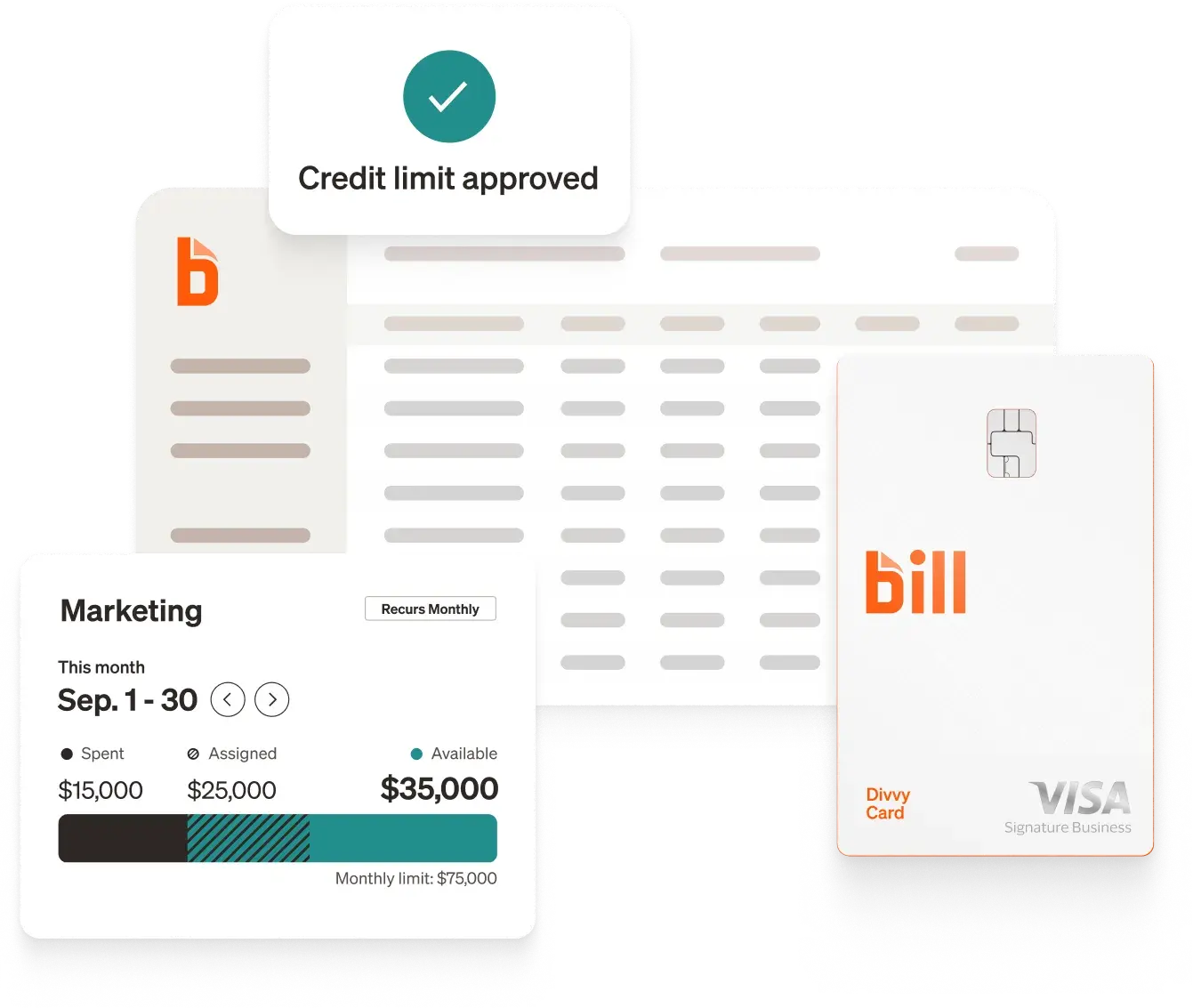
Regularly check in on your marketing budgets to make sure that money is being spent where you think it is. Real-time expense management software can help you see every marketing transaction—as it happens—so you never go over budget again.

BILL Spend & Expense has allowed my remote company the flexibility and nimbleness to setup and track a corporate credit card system with controls in place. Creating a virtual card for recurring vendors has removed employee turnover pain around closing a card and getting all vendors moved to a new card. We have also allowed our marketing department to leverage the points to get gift cards for campaign incentives without it impacting their budget. - VP, Finance of Education Services Company*

*Based on a 2024 survey consisting of 5,000+ BILL customers.

Author
Michael Davis
Contributing writer, BILL
Michael specializes in helping businesses optimize financial operations by staying up-to-date with industry trends and translating insights into real-world applications. With expertise in AP, cash flow, and fintech, Michael breaks down complex topics to help businesses continue to grow.
Author
Michael Davis
Contributing writer, BILL
Michael specializes in helping businesses optimize financial operations by staying up-to-date with industry trends and translating insights into real-world applications. With expertise in AP, cash flow, and fintech, Michael breaks down complex topics to help businesses continue to grow.
Get more from BILL
Subscribe to finance insights and thought leadership content delivered straight to your inbox.
By continuing, you agree to BILL's Terms of Service and Privacy Notice.

Frequently asked questions

Dashboard mockup

Ready to bring AI to your finance team?

Take a demo with BILL to see how our integrated platform can provide your business with seamless AP, AR, and spend and expense management.

Request a Demo
The information provided on this page does not, and is not intended to constitute legal or financial advice and is for general informational purposes only. The content is provided "as-is"; no representations are made that the content is error free.

Software Comparison

BILL Spend & Expense
Best for AI expense automation
4.5 on G2
  • Smart corporate cards with real-time tracking, flexible limits, and instant visibility into every transaction across your team [1]
  • Unlimited free virtual cards with unique numbers for each vendor or subscription—freeze, delete, or set custom limits instantly to prevent overcharges and reduce fraud risk [5]
  • AI-powered auto-categorization and receipt matching that connects card transactions and expenses into a single reconciliation workflow [1]
  • Customizable budgets with spend controls based on merchant, amount, receipt requirements, and configurable approval workflows [3]
  • Auto-freeze on cards with incomplete transactions, ensuring receipts and documentation are captured before additional spend is approved [1]
  • Up to 7x points on restaurants, 5x on hotels, 2x on recurring software, and 1.5x on all other purchases (rates shown are for weekly or daily billing cycle; rates vary by billing frequency) [2]
  • Two-way sync with QuickBooks, NetSuite, Sage Intacct, Xero, and Microsoft Dynamics; additional integrations with Acumatica, Slack, and HRIS platforms [1]
  • Lorem ipsum dolor sit amet: At pretium eget vel non sed integer nibh neque auctor. Massa est et eu dolor a mauris ut at in.
  • Lorem ipsum dolor sit amet: At pretium eget vel non sed integer nibh neque auctor. Massa est et eu dolor a mauris ut at in.
  • Lorem ipsum dolor sit amet: At pretium eget vel non sed integer nibh neque auctor. Massa est et eu dolor a mauris ut at in.
  • Lorem ipsum dolor sit amet: At pretium eget vel non sed integer nibh neque auctor. Massa est et eu dolor a mauris ut at in.
  • Lorem ipsum dolor sit amet: At pretium eget vel non sed integer nibh neque auctor. Massa est et eu dolor a mauris ut at in.
Pricing
$0/user/month with no annual fee
Integrations
Two-way sync with QuickBooks, NetSuite, Sage Intacct, Xero, and Microsoft
Ideal company size
SMB to mid-market
SAP Concur
Best for large enterprises
4 on G2
  • AI-powered receipt capture via ExpenseIt on the SAP Concur mobile app, with smart matching that combines credit card charges and e-receipts into expense reports automatically [7]
  • Configurable approval workflows with built-in audit rules that flag policy exceptions, plus optional Intelligent Audit and Verify add-ons for automated compliance checks [6][7]
  • Modular product suite: Concur Expense, Concur Travel, and Concur Invoice are separate products that can be purchased individually or together, so organizations can start with expense management and add capabilities over time [6]
  • Bank card feed integrations that import corporate card transactions directly into expense reports for automatic reconciliation [6]
  • Joule, SAP's AI assistant, for expense report review, spend analysis, and cost estimation [6]
  • Budget tracking and monitoring tools that give finance teams visibility into spend against departmental or project-level budgets [6]
  • Support for global operations with multi-currency expense reporting and country-specific tax and regulatory compliance tools [6]
  • Pro: 300+ pre-built integrations including native SAP ERP sync [7][8]
  • Pro: Global coverage with multi-currency and regulatory compliance tools [6]
  • Pro: Modular—add travel or invoice management without switching platforms [6]
  • Pro: AI-powered receipt capture and smart matching via ExpenseIt [7]
  • Con: Quote-based pricing; no published rates on the website [6]
  • Con: No corporate card offering; relies on bank card feed integrations [6]
  • Con: Implementation can be complex for smaller organizations [6]
  • Con: Live support requires purchasing the User Support Desk service [6]
Pricing
Quote-based
Integrations
QuickBooks, Xero, Sage,TSheets, Gusto, & most business credit cards.
Ideal Company Size
Mid-market to enterprise
Ramp
Best for a broad spend platform
4.8 on G2
  • Corporate cards with customizable spend controls by merchant, category, employee, or department, plus unlimited virtual and physical cards [9][10]
  • AI-powered receipt matching, transaction coding, and memo suggestions that auto-populate as soon as a card is swiped [9]
  • Policy agent that reviews every expense against company policy, auto-approves compliant transactions, and escalates only exceptions with full audit trail [9]
  • Expense submission via SMS, Slack, or Microsoft Teams in addition to web and mobile app [9]
  • Reimbursements for out-of-pocket expenses paid to employees' bank accounts in 1–2 business days [9]
  • Real-time spend reporting with custom dashboards, natural-language queries, and proactive overspend alerts [9]
  • Broader spend platform that includes AP automation, procurement, vendor management, and treasury alongside expense management [9]
  • Pro: Free plan includes corporate cards, expenses, and bill pay [11]
  • Pro: AI policy agent reviews 100% of expenses automatically [9]
  • Pro: Submit expenses via SMS, Slack, or Teams—no app required [9]
  • Pro: Broader spend platform covers AP, procurement, and vendor management [9]
  • Con: Budget tracking requires Ramp Plus at $15/user/month [11]
  • Con: NetSuite, Sage Intacct, and Dynamics integrations require a paid plan [11]
  • Con: HRIS syncs and auto-lock cards require a paid plan [11]
  • Con: Credit limits fluctuate daily based on connected bank balance [12]
Pricing
$0/user/month
Integrations
QuickBooks, NetSuite, Xero, Sage Intacct, Slack, & 100+ accounting tools.
Ideal Company Size
Startups to mid-market
Brex
Best for global teams
4.8 on G2
  • Corporate cards with customizable spend limits by role, department, or category, plus auto-approve for in-policy expenses and auto-decline for out-of-policy spend [13][14]
  • AI-powered expense reviews that auto-approve compliant transactions and surface only exceptions for human review, with clear visibility into why a transaction is flagged [13]
  • Auto-generated receipts and memos with OCR that matches receipts in any language or currency, plus automatic GL coding by department, project, and entity [13]
  • Live Budgets that let department heads set top-level budgets, provision spend to individuals or teams, and track usage in real time with anomaly detection [13]
  • Global reimbursements in 70+ countries in employees' local currency, with subsidiaries able to issue reimbursements from local bank accounts [13]
  • Expense submission and approval via Slack and WhatsApp, with in-app commenting on individual transactions [13]
  • Broader financial platform that includes bill pay, business banking with up to 3.68% yield, and treasury alongside expense management [14]
  • Pro: Free plan includes corporate cards, expenses, bill pay, and travel [15]
  • Pro: AI expense reviews with 99% average policy compliance rate [14]
  • Pro: Global reimbursements in 70+ countries in local currency [13]
  • Pro: Live Budgets with real-time tracking and anomaly detection [13]
  • Con: Live Budgets require Premium at $12/user/month [15]
  • Con: HRIS syncs and customizable ERP integrations require a paid plan [15]
  • Con: Credit limits fluctuate daily based on connected bank balance [16]
  • Con: Multiple expense policies and dynamic review chains require Premium [15]
Pricing
$0/user/month
Integrations
NetSuite, QuickBooks, Workday,SAP Concur, Slack, & global banking portals.
Ideal Company Size
Startups to mid-market
Expensify
Best for simple reimbursements
4.5 on G2
  • SmartScan receipt capture by photo, email forwarding (receipts@expensify.com), or text message; auto-extracts transaction details and categorizes expenses [17]
  • Bring-your-own-card support: link existing corporate cards from 10,000+ banks globally for automatic reconciliation without switching card providers [17]
  • Expensify Visa Commercial Card with cash back on US purchases; cash back first offsets the Expensify subscription cost, then flows to the company's bank account [17]
  • Concierge AI for automated expense categorization, policy violation flagging, rule enforcement, and error reduction [17]
  • Global reimbursements for employees and independent contractors in their local currency [17]
  • Chat-based collaboration directly on individual expenses to resolve questions in real time rather than through email follow-ups [17]
  • 45+ integrations including QuickBooks, NetSuite, Sage Intacct, Xero, Workday, and Gusto [17]
  • Pro: Bring-your-own-card from 10,000+ banks globally [17]
  • Pro: Expensify Card cash back can offset the subscription cost [17]
  • Pro: SmartScan receipt capture by photo, email, or text message [17]
  • Pro: 45+ integrations including major ERPs and payroll systems [17]
  • Con: No free plan; starts at $5/user/month [18]
  • Con: Pricing structure varies by card spend volume [18]
  • Con: Budget management, advanced approvals, and expense policies require Collect or Control plans [17]
  • Con: No department-level budget management on par with card-first platforms
Pricing
From $5/user/month
Integrations
QuickBooks, Xero, Sage, TSheets, Gusto, & most business credit cards.
Ideal Company Size
Small to mid-market
Zoho Expense
Best for budget-conscious teams
4.5 on G2
  • Autoscan receipt capture with OCR that auto-categorizes and itemizes each expense, plus the ability to split or tag expenses across departments, projects, or cost centers [19][20]
  • Automated per diem calculations with pre-defined rules based on country, location, and trip details for regional compliance [20]
  • Corporate card management with real-time feeds that automatically match transactions to uploaded receipts for faster reconciliation [20]
  • Mileage tracking with four input methods across Android, iPhone, and Apple Watch [20]
  • Configurable approval workflows, expense policies, and audit rules with detailed audit trails for compliance [19][20]
  • Custom modules, workflow automation, webhooks, and configurable UI elements for businesses that need tailored expense processes [19]
  • Active-user pricing model: only employees who actually create expenses are charged, so admins and approvers who don't submit reports are free [21]
  • Pro: Free plan available for up to 3 users with core expense tracking [21]
  • Pro: Active-user pricing—admins and approvers aren't charged [21]
  • Pro: Automated per diem calculations by country and location [20]
  • Pro: Deep customization with custom modules and workflow automation [19]
  • Con: Corporate card feeds and multi-level approvals require Standard plan [21]
  • Con: Deepest value requires the broader Zoho ecosystem (Books, People, CRM) [19]
  • Con: No corporate card offering; relies on connecting existing cards [20]
  • Con: Travel booking, per diem, and live budgets require Premium plan [21]
Pricing
Free (3 users); from $4/user/month
Integrations
Zoho Books, QuickBooks, Xero, Sage, Microsoft Dynamics, & Google Workspace.
Ideal Company Size
Small to mid-market