Get started with a free expense policy template from BILL. The sections below give you everything you need to build a policy from scratch, enforce it consistently, and take the first step toward smoother, stress-free expense management.
What is an expense policy template?
An expense policy template is a structured document that outlines the rules governing how employees spend company money and how the company reimburses them. It covers approved expense categories, spending limits, pre-approval requirements, submission deadlines, reimbursement timelines, and consequences for misuse.
A template gives you the framework so you're not starting from a blank page. The goal is a policy that's specific enough to be enforceable, simple enough that employees can follow it without a guide, and easy enough to update as the company grows.
Why your business needs an expense policy template
Managing business expenses can be a time-consuming and complex task. Without a clear and consistent policy, companies often face issues like overspending, late reimbursements, and miscommunications. An expense policy template helps businesses streamline expense management by providing structured guidelines for both employees and managers. It ensures transparency, reduces confusion, and helps maintain financial discipline across the organization.
78% of customers surveyed agree that using BILL gives them full financial control over their business.[1] The policy is what defines that control; the right tools are what enforce it.
The benefits of using an expense policy template:
- Saves time: With predefined guidelines, employees and managers can avoid back-and-forth discussions about what qualifies for reimbursement.
- Improves transparency: Clear rules help build trust by ensuring everyone is on the same page regarding expense policies.
- Reduces errors: Detailed instructions reduce the likelihood of mistakes in submitting and approving expenses. 87% of customers surveyed agree that BILL helps them reduce errors.[2]
- Boosts productivity: Employees spend less time worrying about administrative tasks and more time working toward business goals.
- Ensures compliance: A comprehensive policy ensures all expenses align with company budgets and regulatory requirements.
What to include in an expense management policy
Expense reimbursement process and guidelines
Your expense policy should outline the process for submitting and approving expense claims, including timelines for submitting requests and receiving reimbursements. Clear guidelines ensure that employees know exactly what steps to follow to get reimbursed promptly. This section should cover who reviews expense reports, what approval thresholds trigger escalation, and how quickly employees can expect payment once a report is approved.
Include the full approval hierarchy in writing: which expenses the direct manager can approve, which require finance team review, and which require executive sign-off. When approval workflows are configured in expense management software, routing happens automatically rather than relying on email chains.
Eligible expenses and categories
Define which expenses are eligible for reimbursement, such as travel, meals, office supplies, or client entertainment. Categorizing expenses helps avoid ambiguity and sets expectations for employees and managers. For each category, include a per-transaction or per-day spending limit so employees know exactly what they can spend before they spend it.
Also list non-reimbursable expenses explicitly: personal charges, traffic fines, alcohol without pre-approval, hotel upgrades, and anything not directly connected to a business purpose. An explicit list of what doesn't qualify is as important as the list of what does.
Documentation requirements and submission procedures
Specify the required documentation for every expense, such as receipts, invoices, or approval notes. Clarify how and where employees should submit expense reports, whether through an online portal, email, or accounting software. Credit card statements alone are not sufficient; itemized receipts showing date, vendor, amount, and business purpose are required. Set a submission window — 30 days is standard — and state it clearly so employees know when late submissions won't be accepted.
Expense policy template examples: spending limits by category
One of the most common questions finance teams face is what spending limits to set. The right answer depends on your industry and geography, but these ranges reflect common benchmarks for US-based businesses:
- Meals: A per-diem meal allowance of $50 to $85 per day for solo travel is typical for most US cities. Major metro areas (New York, San Francisco, Washington DC) often warrant $100 or more. Client entertainment meals are usually capped separately, at $75 to $150 per person, with a documented business purpose required.
- Hotels: Many companies set a nightly hotel limit by city tier rather than a single nationwide number. A tiered approach might look like: up to $150/night in smaller markets, $200 in mid-tier cities, $250 in top-tier metros. A flat national cap of $175 is also common for companies that prefer simplicity.
- Airfare: Economy class for all flights under a certain duration (e.g., under 6 hours) is standard. Some companies allow business class for international flights over 6 or 8 hours, with VP or above approval.
- Mileage reimbursement example: An employee drives 40 miles round-trip to a client meeting using their personal vehicle. At the IRS standard business mileage rate (published annually at IRS.gov), the reimbursable amount for that trip is 40 multiplied by the current rate per mile. The employee submits the date, destination, business purpose, and mileage in their expense report.
US expense reimbursement rules your template must address
Under IRS rules, business expense reimbursements are tax-free to employees when paid under an "accountable plan." An accountable plan has three requirements: the expense must have a business connection, the employee must substantiate the expense with documentation, and any excess reimbursement must be returned to the company. Reimbursements that don't meet these requirements are treated as taxable wages.
Key substantiation requirements under the IRS:
- Amount: The exact dollar amount of the expense
- Time: The date the expense was incurred
- Place: The location or destination
- Business purpose: What business activity the expense relates to
- Attendees: For meals and entertainment, the names of the people present
Employees have until the later of 60 days after the expense was incurred or 120 days after the company provides the advance to substantiate and return any excess. Most well-run expense policies set a shorter internal window (30 days is standard) to keep records current and avoid year-end backlogs.
How to create a free expense policy template
Identify and involve key stakeholders
Start by bringing together key decision-makers who understand the company's budget, operations, and employee needs: finance, HR, and legal at minimum. Their insights help shape a policy that aligns with business goals while addressing employee concerns. Before the meeting, pull three to six months of actual expense data by category so the conversation is grounded in real spending patterns rather than assumptions.
Determine expense limits and approval processes
Establish clear limits for spending in each category to keep expenses within budget, then define an approval hierarchy to ensure all expense requests are reviewed appropriately before reimbursement. Use your spend data to set limits that are firm but not punitive. Map the full escalation path: which expenses the direct manager can approve, which go to finance, and which require the CFO. If you issue corporate cards with preset budget controls by category, the limit is enforced before the money is spent rather than reviewed afterward.
Communicate and train employees on the expense policy
Once your expense policy is ready, ensure employees are aware of it and know how to follow its procedures. Use training sessions, email announcements, and accessible resources such as the company intranet or your expense management platform to communicate the policy effectively. Publish it somewhere employees can find it without emailing HR, and set a calendar reminder to review it annually, updating immediately whenever IRS rates or company structure changes.
How to enforce your expense policy template
Writing a good expense policy is the first problem. Enforcing it is the second, and harder, one. Most policies fail at enforcement for a predictable set of reasons: managers approve borderline claims to avoid conflict, employees submit late because the process is slow, and finance teams lack visibility until month-end reconciliation.
Pre-spend controls
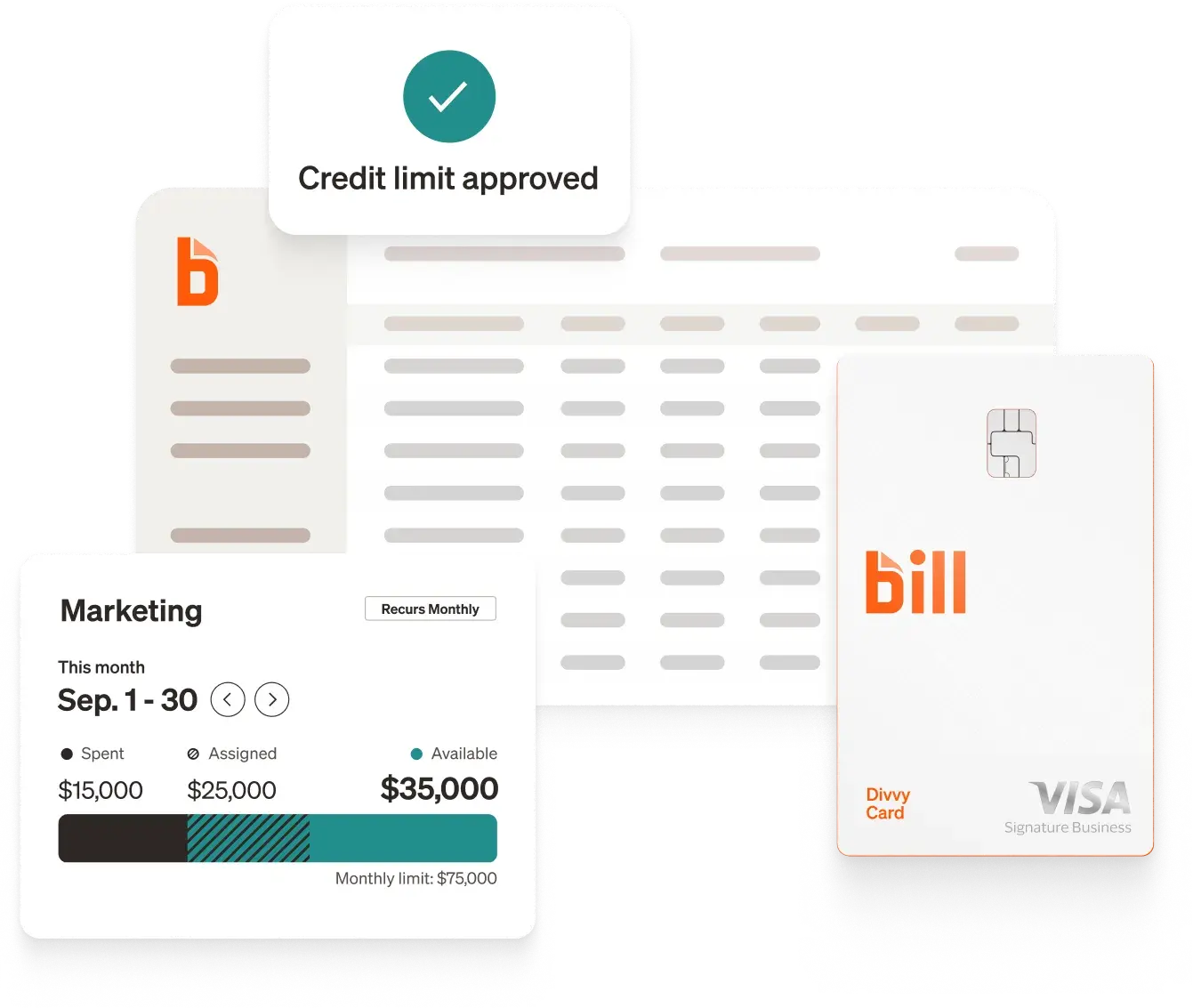
The most effective enforcement happens before money leaves the company, not after. When employees use virtual cards with per-category limits configured in your expense management software, out-of-policy spending is blocked at the point of purchase rather than flagged in a report days later.
Automated approval routing
Rather than relying on managers to remember which submissions need their sign-off, configure approval workflows in your expense management platform so reports route automatically based on amount and category. If an approver doesn't respond within a set window, the system escalates.
Real-time visibility
Finance teams that can see live spend across departments catch anomalies immediately rather than at month-end close. A dashboard showing spend by cardholder, category, and department makes it easy to spot a single outlier without auditing hundreds of receipts.
Consistent consequences
The most important enforcement tool is applying consequences predictably. If out-of-policy expenses are approved 80% of the time when someone pushes back, the policy is functionally optional. Finance teams that track denial rates and flag managers with unusually high approval rates for out-of-policy claims create real accountability.
How BrüMate used BILL to enforce its expense policy at scale
BrüMate, a Denver-based drinkware and cooler company with 50 employees, faced a version of the enforcement problem that many fast-growing businesses recognize. CFO Jarrod Cox was spending a full eight-hour day each month reconciling credit card statements and tracking down receipts from team members. The company had shared physical cards, no real-time visibility into department budgets, and no way to enforce category limits before spending happened.
After implementing BILL Spend & Expense, BrüMate moved to virtual cards issued per team member, with per-cardholder limits and category controls configured directly in the platform. New cards could be created on demand for team members heading to trade shows or launching campaigns, with spending limits tied to the approved budget. The monthly reconciliation process dropped from a full day to one to two hours. 84% of customers surveyed agree that BILL has eliminated hours of manual work from their weekly routine.[3]
"As an executive, one of the benefits of BILL Spend & Expense is once we develop budgets and strategy, we're able to empower team leads," says Cox. "There's no such thing as having to pass around a physical card." (See BrüMate's full story)
As of September 30, 2025, 498,000 businesses use BILL's solutions to manage spend, payments, and financial operations.[4] For teams ready to move from a static policy document to one enforced automatically, BILL offers a demo to walk through the setup.
Frequently asked questions
How do you write an expense policy?
Start by auditing actual spending to understand what categories and amounts are common in your business. Then set per-category limits based on that data, define your approval workflow, specify submission requirements (receipt type, deadline, format), and state the consequences for non-compliance. Once drafted, share it with finance, HR, and legal for review before publishing. Review and update it at minimum once a year.
Can you provide an example of an expense reimbursement policy?
Here is a short example: "Employees traveling on company business may be reimbursed for economy-class airfare, hotel accommodation up to $200 per night, and meals up to $75 per day. All expenses must be submitted within 30 days of the trip using the company's expense management system, with itemized receipts attached. Reports are approved by the employee's direct manager and processed within 10 business days of approval. Expenses submitted without receipts, or outside approved categories, will not be reimbursed."
What are the rules and requirements for expense reimbursement in the US?
Under IRS rules, business expense reimbursements are tax-free when paid under an "accountable plan." This requires that: (1) the expense has a legitimate business connection, (2) the employee provides adequate documentation (amount, date, place, business purpose, and attendees for meals), and (3) any excess reimbursement beyond the actual expense is returned. Reimbursements that do not meet these three tests are treated as taxable wages. Most state laws do not require employers to reimburse business expenses, though California, Illinois, Massachusetts, and a handful of others do have statutory reimbursement requirements — consult an employment attorney for your specific jurisdiction.
Can you provide an example of a mileage reimbursement policy?
Here is a sample mileage reimbursement policy section: "Employees who use their personal vehicle for approved business travel are reimbursed at the IRS standard business mileage rate (updated annually; visit IRS.gov for the current rate). Reimbursable mileage includes travel to client sites, offsite meetings, and approved business errands. Commuting between home and your primary office is not reimbursable. To claim mileage, submit a mileage log with: date of travel, starting and ending address, total miles, and business purpose. Mileage claims must be submitted within 30 days of travel."
Should expense limits differ by employee level?
Some companies set tiered limits by seniority (e.g., VPs may book business class on long international flights; individual contributors may not). This approach is defensible but adds complexity to policy administration. A simpler approach is a single limit per category, with a documented exception process for any request outside that limit. Either way, the limit should be written into the policy rather than existing as an informal norm.
What is the difference between a reimbursement policy and a corporate card policy?
A reimbursement policy governs expenses employees pay out of pocket and then submit for payment. A corporate card policy governs how employees use company-issued cards. Many businesses have both, with specific categories covered by each method. The practical advantage of corporate cards with category controls is that limits are enforced before spending happens, rather than reviewed afterward. For high-volume or fast-moving teams, the pre-spend enforcement model substantially reduces out-of-policy spending.