Author
Melissa Ginder
VP of Product Management
Melissa serves as the vice president of product management at BILL.
Author

Melissa Ginder
VP of Product Management
Melissa serves as the vice president of product management at BILL.

Take a demo with BILL to see how our integrated platform can provide your business with seamless AP, AR, and spend and expense management.

Pros
Cons
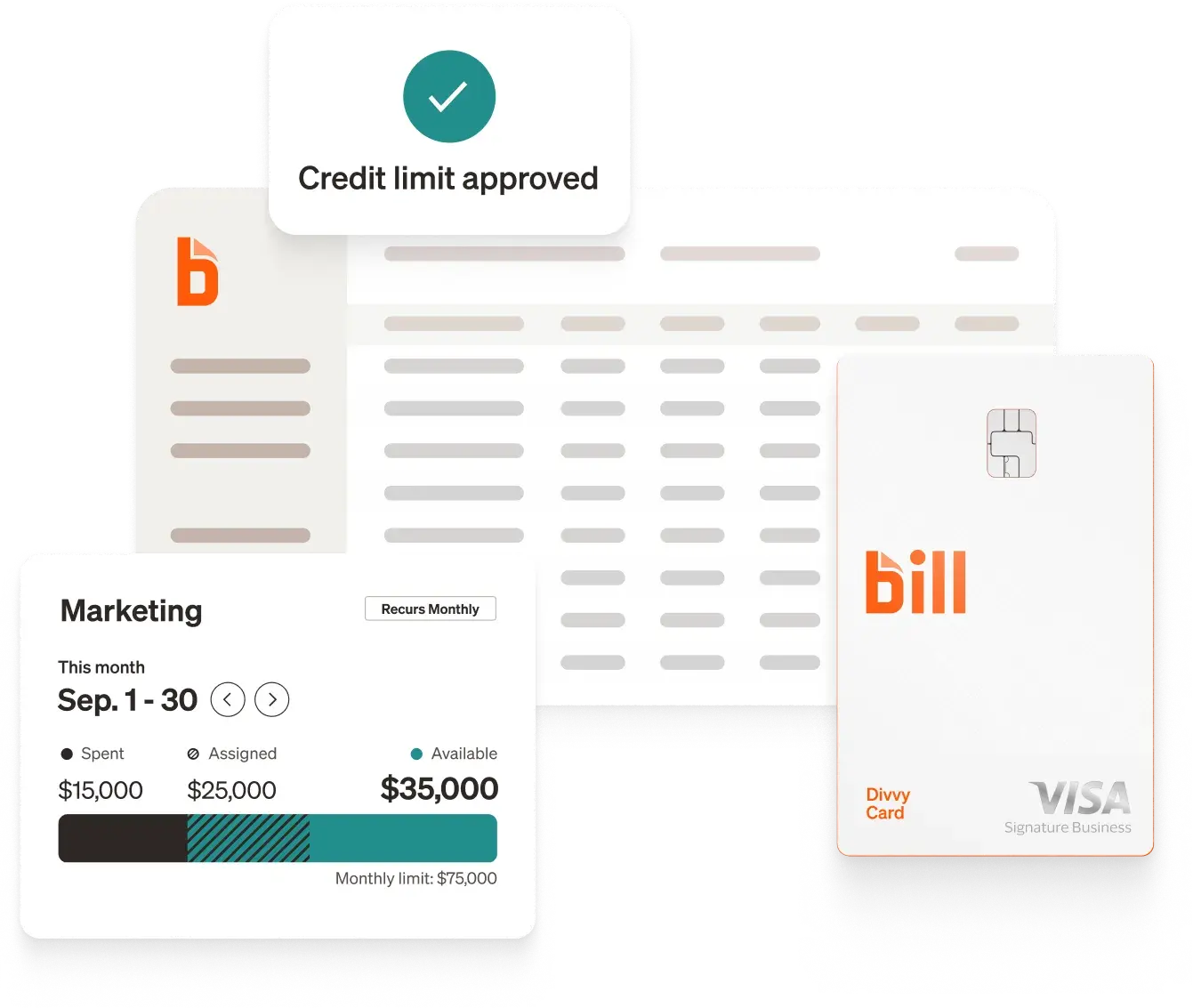
BILL Spend & Expense pairs corporate cards with AI-powered expense management and budget controls in a single platform at no cost—teams aren't paying per user or upgrading to unlock features that competitors gate behind paid tiers.
Merchant-level spend controls and auto-freeze on incomplete transactions give admins granular oversight without manual policing, and two-way ERP integrations are included free where Ramp and Brex charge for NetSuite and Sage Intacct access. The main trade-off is an initial 12-month rewards holding period before accumulated points can be redeemed. [1][2][3][4]
Commonly compared to: Ramp and Brex (for card-first expense management), and SAP Concur (for enterprise expense programs).

Pros
Cons
SAP Concur is the incumbent in expense management software, with the largest partner ecosystem and broadest global footprint on this list. Its modular approach gives large organizations flexibility to start with expense management and layer on travel or invoice capabilities independently.
The trade-off is complexity—pricing is opaque, there's no corporate card offering, and smaller teams may find the platform more than they need. Organizations already in the SAP ecosystem will get the most value from native S/4HANA integration. [6][7][8]
Commonly compared to: BILL (for SMB expense management), and Coupa (for enterprise spend management).

Pros
Cons
Ramp's strength is breadth—it's not just an expense tool but a full spend management platform that includes AP automation, procurement, and vendor management alongside expenses. The AI policy agent is a differentiator, reviewing every transaction against company rules rather than relying on manual manager approvals.
The trade-off is that several features mid-market teams rely on—budget tracking, ERP integrations beyond QuickBooks and Xero, and HRIS syncs—require upgrading to Ramp Plus at $15/user/month plus a platform fee. [9][11]
Commonly compared to: Brex and BILL (for corporate cards and expense management), and SAP Concur (for enterprise expense programs).

Pros
Cons
Brex positions itself as a full financial stack for startups—cards, expenses, banking, and treasury in one platform. The AI expense reviews and 99% average compliance rate (per Brex's internal metrics) are notable, and the global reimbursement coverage across 70+ countries is broader than most competitors on this list.
Like Ramp, Brex gates budget management and HRIS integrations behind a paid tier, and credit limits fluctuate daily based on your bank balance. Teams that need predictable spending power or are past the startup stage may find the pricing structure adds up. [13][14][15]
Commonly compared to: Ramp and BILL (for corporate cards and expense management), and SAP Concur (for enterprise expense programs).

Pros
Cons
Expensify's strength is accessibility—it has the lowest barrier to entry for teams that just need to start tracking expenses and submitting receipts. The bring-your-own-card support from 10,000+ banks means companies don't have to switch card providers, and the SmartScan receipt capture (by photo, email, or text) is one of the more flexible input methods on this list.
The trade-off is that several features mid-market teams expect—budget management, advanced approvals, and expense policies—require upgrading to the Collect or Control plans, and spend controls are primarily limited to the Expensify Card rather than extending across all connected cards. [17][18]
Commonly compared to: Zoho Expense (for budget-friendly expense management), and BILL and Ramp (for integrated cards and expenses).

Pros
Cons
Zoho Expense offers unusually deep customization at a low price point—custom modules, workflow automation, webhooks, and configurable UI elements that most competitors don't expose. The active-user pricing model is genuinely cost-effective for companies where only a portion of employees submit expenses regularly.
The trade-off is that there's no corporate card offering—you'll need to connect your existing cards—and the platform delivers its deepest value when used alongside other Zoho products like Zoho Books and Zoho People. [19][20][21]
Commonly compared to: Expensify (for budget-friendly expense management), and SAP Concur (for global compliance and customization).

Pros
Cons
BILL's strength in AP automation is its combination of AI agents and network scale. The platform has processed over 1.3 billion documents and stopped 8 million fraud attempts, with AI agents that autonomously handle invoice coding, W-9 collection, and transaction reconciliation—not just data extraction. [3][4] The 93% ease-of-use rating and two-week time-to-value make it accessible without a lengthy implementation, and benefits extend beyond AP with accounts receivable available on the same platform. [1][2]
Commonly compared to: Ramp and Tipalti (for mid-market AP automation).

Pros
Cons
Ramp's reported free tier covers basic AP automation—OCR capture, approval workflows, and multiple payment methods with no base software cost, though per-transaction fees apply. The trade-off is that Ramp reports several features mid-market teams typically need—AI auto-coding, ERP integrations beyond QuickBooks and Xero, and multi-entity support—to require upgrading to Ramp Plus at $15/user/month plus a platform fee. Ramp's advertised feature package is strongest when used as a unified platform across AP, cards, and expenses rather than as a standalone AP tool. [7][8][9]
Commonly compared to: BILL and Tipalti (for mid-market AP automation).

Pros
Cons
Tipalti reports a strong feature listis the strongest option on this list for businesses with significant international payment needs. The combination of 200+ countries, 120 currencies, and a supplier portal in 27 languages as listed on its website will be attractive tomakes it purpose-built for global AP operations in a way that general-purpose AP tools are not. Customers profiled on the site report up to 80% reduction in AP workflow time. [10] The trade-off is complexity and cost—according to Tipalti's materials, the full global feature set requires the Advanced plan at $199/month or higher, and there is no listed free tier to start with.
Commonly compared to: BILL and Stampli (for mid-market AP), and Coupa (for enterprise procurement).
Pros
Cons
Stampli's reported in-house ERP integrations and the ability for teams to discuss and resolve invoice questions directly on the document appear to beare genuine differentiators for organizations with complex approval workflows. The listed 86% automation rate is strong, though the Cognitive AI tier is stated to require an upgrade—and the lack of published pricing means teams will need a sales conversation to evaluate cost. [13][14][15]
Commonly compared to: BILL and Tipalti (for mid-market AP automation).
Pros
Cons
Melio appears to be the most accessible option on this list for small businesses that just need to pay bills. The reported card-to-ACH conversion feature lets businesses earn credit card rewards on vendor payments even when vendors don't accept cards, while deferring payment to the next billing cycle for cash flow flexibility. [16] (BILL does this too with BILL Pay By Card.) The trade-off is depth: Melio seems to lacklacks AI invoice coding, PO matching, and ERP integrations that growing businesses typically need, which may require migrating to a more capable platform as AP volume increases. [16][17]
Commonly compared to: BILL and Ramp (for small business AP).
Pros
Cons
Yooz reports a pricing model that's unique on this list: per-document rather than per-user. For organizations with large AP teams processing high invoice volumes, this could be more cost-effective than per-seat licensing—especially since unlimited users seem to be included. The AI-powered self-learning capabilities listed on the site say that they improve accuracy over time, and 250+ listed integrations make it compatible with most accounting environments. [18][19] The platform claims to increase productivity by 80%. [18][20]
Commonly compared to: BILL and Stampli (for mid-market AP automation).

Pros
Cons
BILL Spend & Expense is not a traditional credit card—it is an AI-powered expense management platform with a card attached. The rewards rates (up to 7x on restaurants, 5x on hotels) are competitive with premium travel cards, but the real differentiator is the built-in budgeting, approval workflows, and accounting integrations that come at no additional cost. [1][3]
Commonly compared to: Chase Sapphire Reserve for Business, Capital One Venture X Business, and The Business Platinum Card from American Express (for general travel cards).

Pros
Cons
The Chase Sapphire Reserve for Business reports a high portal earning rateat 8x through Chase Travel, and the listed travel protections are unusually specific—primary auto rental coverage up to $75,000 and cell phone protection up to $1,000 per claim. [6] The $795 annual fee is offset by over $1,000 in enumerated annual credits, though capturing them requires booking through Chase Travel rather than directly with airlines or hotels. [6]
Commonly compared to: The Business Platinum Card from American Express and Capital One Venture X Business (for general travel cards).

Pros
Cons
The Business Platinum Card reports the highest annual fee on this list at $895, but the listed statement credits total over $3,000 if your team would capture them all. [7] Its strength is its advertised breadth—Centurion Lounge and Delta Sky Club access, Gold status at both Hilton and Marriott, and a 35% airline bonus on point redemptions give it a footprint across multiple travel ecosystems that no single co-branded card matches. [7]
Commonly compared to: Chase Sapphire Reserve for Business and Capital One Venture X Business (for general travel cards).

Pros
Cons
For $395 per year with a $300 travel credit, the Venture X Business lists 1,300+ lounges, free employee cards, and a 10x portal rate on hotels and rental cars—at roughly half the annual fee of some competing premium cards. [9] Two gaps worth noting: foreign transaction fees are not listed in the card's fee disclosures, and travel insurance protections are not specified on the product page. [9]
Commonly compared to: Chase Sapphire Reserve for Business and The Business Platinum Card from American Express (for general travel cards).

Pros
Cons
The Citi AAdvantage Executive is the only card on this list that promotes a full Admirals Club membership, valued at up to $850 by American Airlines—which on its own could cover the $595 annual fee. [10] The reported 10x earning rate on hotels and car rentals through AAdvantage and the loyalty points path toward elite status make it a strong fit for AA-focused businesses, though authorized users at $175 each add up faster than the $0 employee cards offered by Chase and Capital One. [10]
Commonly compared to: Delta SkyMiles Reserve Business Card from American Express and United Club Business Card (for co-branded airline cards).

Pros
Cons
BILL Spend & Expense with BILL Travel is designed around a simple idea: set your travel policies and budgets once, and the platform handles compliance from that point forward. Travel bookings, virtual cards, expense reports, and accounting sync all live in one system at no cost—which means admins aren't managing separate tools and travelers aren't guessing what's allowed. The 24/7 human travel support and up to 80% cancellation refund address common pain points for teams that don't have a dedicated travel manager. [1][2][4][5]
Commonly compared to: Navan, Ramp, and Brex (for integrated T&E platforms).

Pros
Cons
SAP Concur is the incumbent in T&E software, with the largest partner ecosystem and broadest global footprint on this list. Its modular approach gives large organizations flexibility to deploy travel and expense capabilities independently, and the ability to work with any TMC or GDS means companies don't have to change their existing booking relationships. The trade-off is complexity—pricing is opaque, travel and expense are separate purchases, and smaller teams may find the platform more than they need. [6][7][9]
Commonly compared to: Navan and BILL (for integrated T&E), and Coupa (for enterprise spend management).

Pros
Cons
Navan is purpose-built around travel booking in a way that most competitors on this list are not—travel isn't a feature added onto a card or expense platform, it's the foundation. The AI-powered booking recommendations and Navan Rewards program create a strong experience for frequent travelers and the admins managing them. The main consideration is cost: while travel booking is free, the expense management side starts at $15/user/month after the first 5 users, which can add up for mid-market teams. [11][13][15]
Commonly compared to: SAP Concur and BILL (for integrated T&E), and Brex (via the BrexPay partnership).

Pros
Cons
Ramp's strength is breadth—it's not just a T&E tool but a full spend management platform that includes AP automation, procurement, and vendor management alongside travel and expenses. The free plan is genuinely useful, and the automatic hotel rebook feature is a unique cost-saving tool. The trade-off for T&E specifically is that travel booking runs through Priceline rather than a dedicated travel platform, and several features that mid-market teams rely on—budget management, ERP integrations beyond QuickBooks and Xero, and HRIS syncs—require upgrading to Ramp Plus. [17][19]
Commonly compared to: Brex and BILL (for corporate cards and expense management), and Navan (for travel booking).

Pros
Cons
Brex differentiates on travel inventory—sourcing from direct airline integrations, global distribution systems, low-cost carriers, and consumer booking sites gives travelers more options than most competitors on this list. The group event management feature is also unique and useful for companies that regularly coordinate team offsites or client events. Like Ramp, Brex gates budget management and HRIS integrations behind a paid tier, and its credit limits fluctuate daily based on your bank balance, which may be a consideration for teams that need predictable spending power. [20][22][23]
Commonly compared to: Ramp and BILL (for corporate cards and expense management), and Navan (via the BrexPay partnership).

Pros
Cons
Expensify's strength is accessibility—it has the lowest barrier to entry for teams that just need to start tracking expenses and submitting receipts. The bring-your-own-card support from 10,000+ banks means companies don't have to switch card providers, and the SmartScan receipt capture (by photo, email, or text) is one of the more flexible options on this list. Travel booking is available in-app, but it's a more recent addition and not the platform's primary focus. Teams that need deeper travel policy controls or budget enforcement at the point of booking may find the travel features thinner than dedicated T&E platforms. [24][25][27]
Commonly compared to: Zoho Expense (for budget-friendly expense management), and BILL and Ramp (for integrated cards and expenses).

Pros
Cons
Zoho Expense is the most affordable option on this list and offers unusually deep customization—custom modules, workflow automation, webhooks, and configurable UI elements that most competitors don't expose. The active-user pricing model is genuinely cost-effective for companies where only a portion of employees travel and submit expenses. For travel specifically, the platform supports self-booking and a centralized travel desk, but the booking experience runs through a third-party integration (Sabre GetThere) rather than a native tool, and there's no corporate card offering—you'll need to connect your existing cards. [28][29][30]
Commonly compared to: Expensify (for budget-friendly expense management), and SAP Concur (for global compliance and customization).