Blog
  /  
Spend Management
  /  
17 expenses for nonprofit organizations

17 expenses for nonprofit organizations

Emily Taylor
Contributing writer, BILL
illustrated hand holding a device with a dollar signHeader imageHeader imageHeader imageHeader image
Table of contents
Get more from BILL
Subscribe to finance insights and thought leadership content delivered straight to your inbox.
By continuing, you agree to BILL's Terms of Service and Privacy Notice.

To maintain their tax-exempt status, nonprofits need to manage their expenses according to strict IRS rules. This article covers some information that can help you comply with those regulations while maximizing the impact of your mission. Please refer to the IRS guidelines for access to all applicable rules.

Key takeaways

Nonprofits are required to treat 3 kinds of expenses differently: program services, management, and fundraising.

When expenses span two or more categories, nonprofits need to allocate them accurately across those categories.

Nonprofits also need to follow specific IRS rules for reasonable compensation, disclosures, and record-keeping.

Why understanding your nonprofit's expenses matters

Nonprofit organizations incur expenses that support their operations and mission. These expenses typically fall into three main categories:

  • Program expenses: Costs directly related to delivering the nonprofit’s mission and services.
  • Administrative expenses: Costs for general operations and management.
  • Fundraising expenses: Costs associated with raising funds to support the organization.

Tracking and managing these expenses helps nonprofits comply with IRS regulations, demonstrate accountability to donors, and maximize resources devoted to their mission.

Ultimately, managing expenses for a nonprofit organization requires clear, strategic choices that can support your fundraising while expanding your mission's reach.

See how BILL can help you manage your nonprofit expenses.
IRS rules for nonprofit expenses

IRS rules for nonprofit expenses

The IRS has laid out specific rules, regulations, and guidelines for categorizing and reporting expenses for nonprofit organizations. 

Some are fairly obvious, like not using nonprofit funds to line your own pockets. Others might seem less straightforward, at least at first, but they all come down to making sure nonprofits aren't misusing their funds.

Functional expenses: the three categories of nonprofit expenses

The IRS requires nonprofits to categorize their functional costs into three main areas. With standardized reporting on Form 990, these categories help stakeholders understand how organizations are using their resources.

Program expenses

Program expenses are the direct costs of the activities that fulfill the nonprofit's mission, clearly supporting the organization's charitable purpose. The IRS expects organizations to maintain detailed documentation showing how these expenses contribute to their charitable programs.

Management and general expenses

Management and general costs are necessary for the organization's operation but aren't directly tied to programs or fundraising. The IRS allows reasonable administrative costs but expects nonprofits to keep these administrative expenses proportional to their overall budget and mission scope.

Fundraising expenses

Fundraising expenses must be properly identified and reported separately from program and management expenses. The IRS requires clear documentation of costs associated with soliciting contributions, including both direct and indirect expenses related to fundraising activities.

Reasonable compensation rules

The IRS requires that compensation for nonprofit employees and executives be reasonable and not excessive. 

Organizations must demonstrate that salaries and benefits are comparable to those of similar positions in their sector and geographic area. This includes documenting how compensation levels were determined and maintaining records of comparable salary data.

Private benefit and inurement prohibitions 

The IRS prohibits nonprofits from using funds to benefit anyone connected to the organization, like board members, trustees, employees, or their families.

This rule exists to make sure nonprofit resources go toward charitable purposes, not someone's personal gain. Even small amounts of private benefit can jeopardize your tax-exempt status.

That said, nonprofits can still compensate employees fairly for their work. We recommend keeping records that show the compensation is reasonable and in line with industry standards.

Disclosure requirements 

The IRS requires nonprofits to make certain financial information available to the public. This transparency helps maintain public trust and accountability.

You'll need to provide copies of your three most recent Form 990s to anyone who asks. Many nonprofits simply post these forms on their websites to make them easily accessible.

Documentation and record-keeping requirements 

Good documentation isn't just about satisfying IRS requirements—it's about protecting your organization and maintaining donor trust.

Keep detailed records of all expenses—including receipts, invoices, and documentation showing why each expense was necessary. For major expenses, maintain records of the decision-making process, including any board approvals.

The IRS requires you to keep these records for at least three years, but many organizations keep them longer for grant compliance or historical reference.

See how BILL helps you document your nonprofit expenses.

A complete list of nonprofit expenses 

Let's break down common expenses by category, so you can see how to classify each type of cost your organization might incur.

Program expenses

This is the money you spend on your mission. All of these specific program costs relate directly to your organization's charitable purpose. Below are some of the most common examples.

1. Direct service costs: If your nonprofit is providing a service, like tutoring for underprivileged kids, the cost of that service is a program expense. These costs include any services that are specifically being provided as part of your mission.

2. Program-specific personnel: This includes salaries and benefits for the staff who directly deliver your programs, like teachers, social workers, or medical professionals.

3. Program supplies and materials: These are the ongoing supplies needed to run your programs, from educational materials to food for meals to medical supplies, depending on your mission.

4. Program-specific technology: This covers software, equipment, or other technology used specifically for program delivery, like case management software or specialized medical equipment.

5. Direct travel for program delivery: Travel expenses that are directly related to delivering services, like mileage reimbursement for delivering meals, are also included in program service expenses.

Management and general expenses

These operational costs are necessary to run your nonprofit organization, but they aren't tied directly to your programs or fundraising. Here are some common examples.

1. Administrative personnel: This covers salaries and benefits for staff who handle your organization's general operations, but who aren't directly delivering your programs, such as your executive director, finance team, public relations, and HR staff.

2. Professional services: These operating expenses include nonprofit accounting, legal fees, and any consulting services that are needed to ensure compliance with federal regulations and run your organization effectively.

3. Facilities expenses: This category includes rent, utilities, and other costs incurred to maintain your headquarters or office space independent of your program operations.

4. Office supplies, equipment, and technology: This covers general office technology and equipment for day-to-day operations that aren't specific to program delivery, like computers, phones, and general-purpose software.

5. Insurance and risk management: This includes liability insurance, property insurance, and other coverage needed to protect your entire organization generally.

6. Marketing and communications: These costs are related to general organizational communications, like your website, annual report, and general marketing materials, not tied to any specific fundraising or program delivery.

Fundraising expenses 

These are the fundraising costs associated with raising money for your organization. While they're necessary for sustainability, you'll want to keep them reasonable compared to the funds you raise.

1. Fundraising events and campaigns: This includes all costs associated directly with fundraising activities, from venue rentals and catering for events to online campaign costs and printed materials specifically for fundraising.

2. Development staff: This covers salaries and benefits for employees who focus on fundraising and donor relations, including your development director and grant writers.

3. Donor management systems: These are the tools and software you use to track donations, manage donor relationships, and run fundraising campaigns.

4. Grant writing costs: This includes not just the staff time spent writing grants, but also any consulting fees, grant-specific research costs, and resources dedicated to grant reporting.

Allocating mixed expenses 

Some expenses don't fit neatly into a single category. Here's how to handle functional expense allocation for costs that span multiple areas.

1. Shared personnel time: When staff members split their time between different functions, you'll need to allocate their costs accordingly. For example, if your executive director spends 60% of their time on management, 30% on programs, and 10% on fundraising, their salary should be split the same way.

2. Facility usage: Similarly, if you use your main building for multiple purposes, allocate those costs based on usage. 

These allocations might be based on space—maybe your administrative offices make up 20% of the floor space and the other 80% is used for the people who run your nonprofit hotline. Or they could be based on time, like a community center that's occasionally used for fundraising. Or both—if 20% is admin space and the other 80% is sometimes used for programs and sometimes for fundraising.

The key is to allocate expenses using a meaningful accounting system that you can easily validate and to make sure you're documenting that system.

Manage your nonprofit expenses with BILL Spend & Expense 

Managing these different expense categories—and making sure they're properly allocated—can be challenging. 

BILL Spend & Expense can help you:

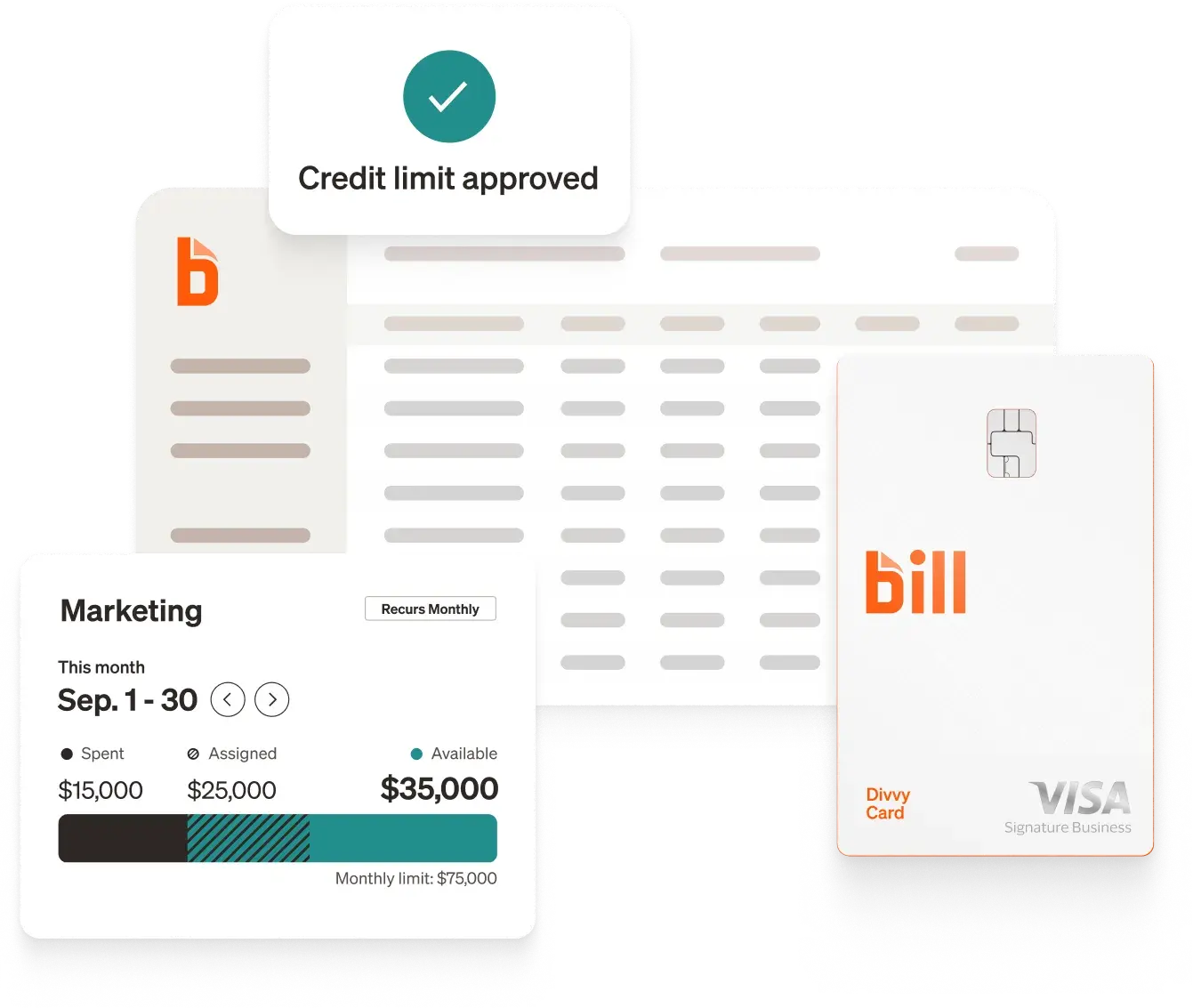
  • Set budgets by category—code expenses and enforce budgets automatically
  • Maintain proper documentation for each expense
  • Create financial reports for your board and the IRS
  • Set approval rules and workflows for different types of expenses
  • Sync your data to your accounting software to keep everything up to date
See how BILL can help you manage your nonprofit expenses more effectively.

What our nonprofit customers say about BILL

“The impact of adding BILL was immediate and dramatic. What used to take 20 hours a week in manual payment processing has been cut to less than a couple hours.” — Network of Community Ministries
“I appreciate the robust user controls in BILL. Some team members can just enter bills, others can be approvers, and only the leadership team can make changes once approved. It’s easy to show that to auditors or print the audit history and cashed checks.” — Hidden Villa
“My desk was the most disgusting thing with paper up to here. Now my auditors come and I don’t have to stay up all night wondering what happened to one bill.” — The Life Link
Author
Emily Taylor
Contributing writer, BILL
With a background in finance and over a decade of experience in business writing, Emily simplifies complex finance topics to help businesses streamline operations, manage cash flow, and make smarter financial decisions.
Author
Emily Taylor
Contributing writer, BILL
With a background in finance and over a decade of experience in business writing, Emily simplifies complex finance topics to help businesses streamline operations, manage cash flow, and make smarter financial decisions.
Get more from BILL
Subscribe to finance insights and thought leadership content delivered straight to your inbox.
By continuing, you agree to BILL's Terms of Service and Privacy Notice.

Frequently asked questions

Dashboard mockup

Ready to bring AI to your finance team?

Take a demo with BILL to see how our integrated platform can provide your business with seamless AP, AR, and spend and expense management.

Request a Demo
The information provided on this page does not, and is not intended to constitute legal or financial advice and is for general informational purposes only. The content is provided "as-is"; no representations are made that the content is error free.

Software Comparison

BILL Spend & Expense
Best for AI expense automation
4.5 on G2
  • Smart corporate cards with real-time tracking, flexible limits, and instant visibility into every transaction across your team [1]
  • Unlimited free virtual cards with unique numbers for each vendor or subscription—freeze, delete, or set custom limits instantly to prevent overcharges and reduce fraud risk [5]
  • AI-powered auto-categorization and receipt matching that connects card transactions and expenses into a single reconciliation workflow [1]
  • Customizable budgets with spend controls based on merchant, amount, receipt requirements, and configurable approval workflows [3]
  • Auto-freeze on cards with incomplete transactions, ensuring receipts and documentation are captured before additional spend is approved [1]
  • Up to 7x points on restaurants, 5x on hotels, 2x on recurring software, and 1.5x on all other purchases (rates shown are for weekly or daily billing cycle; rates vary by billing frequency) [2]
  • Two-way sync with QuickBooks, NetSuite, Sage Intacct, Xero, and Microsoft Dynamics; additional integrations with Acumatica, Slack, and HRIS platforms [1]
  • Pro: $0/user/month with all features included—no paid tier to unlock [4]
  • Pro: Merchant controls and auto-freeze cards at no extra cost [1]
  • Pro: Credit lines that don't fluctuate daily based on bank balance [4]
  • Pro: All ERP integrations (NetSuite, Sage Intacct, Xero) included free [1]
  • Con: 12-month holding period before rewards can be redeemed [2]
  • Con: Category reward multipliers cap at $5,000/month per category [2]
  • Con: Less established in global, enterprise-scale expense programs with multi-country regulatory requirements

BILL Spend & Expense pairs corporate cards with AI-powered expense management and budget controls in a single platform at no cost—teams aren't paying per user or upgrading to unlock features that competitors gate behind paid tiers.

Merchant-level spend controls and auto-freeze on incomplete transactions give admins granular oversight without manual policing, and two-way ERP integrations are included free where Ramp and Brex charge for NetSuite and Sage Intacct access. The main trade-off is an initial 12-month rewards holding period before accumulated points can be redeemed. [1][2][3][4]

Commonly compared to: Ramp and Brex (for card-first expense management), and SAP Concur (for enterprise expense programs).

Pricing
$0/user/month with no annual fee
Integrations
Two-way sync with QuickBooks, NetSuite, Sage Intacct, Xero, and Microsoft
Ideal company size
SMB to mid-market
SAP Concur
Best for large enterprises
4 on G2
  • AI-powered receipt capture via ExpenseIt on the SAP Concur mobile app, with smart matching that combines credit card charges and e-receipts into expense reports automatically [7]
  • Configurable approval workflows with built-in audit rules that flag policy exceptions, plus optional Intelligent Audit and Verify add-ons for automated compliance checks [6][7]
  • Modular product suite: Concur Expense, Concur Travel, and Concur Invoice are separate products that can be purchased individually or together, so organizations can start with expense management and add capabilities over time [6]
  • Bank card feed integrations that import corporate card transactions directly into expense reports for automatic reconciliation [6]
  • Joule, SAP's AI assistant, for expense report review, spend analysis, and cost estimation [6]
  • Budget tracking and monitoring tools that give finance teams visibility into spend against departmental or project-level budgets [6]
  • Support for global operations with multi-currency expense reporting and country-specific tax and regulatory compliance tools [6]
  • Pro: 300+ pre-built integrations including native SAP ERP sync [7][8]
  • Pro: Global coverage with multi-currency and regulatory compliance tools [6]
  • Pro: Modular—add travel or invoice management without switching platforms [6]
  • Pro: AI-powered receipt capture and smart matching via ExpenseIt [7]
  • Con: Quote-based pricing; no published rates on the website [6]
  • Con: No corporate card offering; relies on bank card feed integrations [6]
  • Con: Implementation can be complex for smaller organizations [6]
  • Con: Live support requires purchasing the User Support Desk service [6]

SAP Concur is the incumbent in expense management software, with the largest partner ecosystem and broadest global footprint on this list. Its modular approach gives large organizations flexibility to start with expense management and layer on travel or invoice capabilities independently.

The trade-off is complexity—pricing is opaque, there's no corporate card offering, and smaller teams may find the platform more than they need. Organizations already in the SAP ecosystem will get the most value from native S/4HANA integration. [6][7][8]

Commonly compared to: BILL (for SMB expense management), and Coupa (for enterprise spend management).

  • Best for: Mid-market and enterprise organizations that need a globally scalable expense management platform with configurable compliance tools and a large partner ecosystem. [6][7][8]
  • Highlights: AI-powered receipt capture via ExpenseIt, configurable approval workflows with built-in audit rules, optional Intelligent Audit and Verify add-ons for automated compliance checks, 300+ app integrations, and native SAP ERP sync. [6][7][8]
  • Ideal if you need: An expense platform that integrates natively with SAP S/4HANA or other enterprise ERPs, with the flexibility to add modules like Concur Travel or Concur Invoice over time. [6][7]
Pricing
Quote-based
Integrations
QuickBooks, Xero, Sage,TSheets, Gusto, & most business credit cards.
Ideal Company Size
Mid-market to enterprise
Ramp
Best for a broad spend platform
4.8 on G2
  • Corporate cards with customizable spend controls by merchant, category, employee, or department, plus unlimited virtual and physical cards [9][10]
  • AI-powered receipt matching, transaction coding, and memo suggestions that auto-populate as soon as a card is swiped [9]
  • Policy agent that reviews every expense against company policy, auto-approves compliant transactions, and escalates only exceptions with full audit trail [9]
  • Expense submission via SMS, Slack, or Microsoft Teams in addition to web and mobile app [9]
  • Reimbursements for out-of-pocket expenses paid to employees' bank accounts in 1–2 business days [9]
  • Real-time spend reporting with custom dashboards, natural-language queries, and proactive overspend alerts [9]
  • Broader spend platform that includes AP automation, procurement, vendor management, and treasury alongside expense management [9]
  • Pro: Free plan includes corporate cards, expenses, and bill pay [11]
  • Pro: AI policy agent reviews 100% of expenses automatically [9]
  • Pro: Submit expenses via SMS, Slack, or Teams—no app required [9]
  • Pro: Broader spend platform covers AP, procurement, and vendor management [9]
  • Con: Budget tracking requires Ramp Plus at $15/user/month [11]
  • Con: NetSuite, Sage Intacct, and Dynamics integrations require a paid plan [11]
  • Con: HRIS syncs and auto-lock cards require a paid plan [11]
  • Con: Credit limits fluctuate daily based on connected bank balance [12]

Ramp's strength is breadth—it's not just an expense tool but a full spend management platform that includes AP automation, procurement, and vendor management alongside expenses. The AI policy agent is a differentiator, reviewing every transaction against company rules rather than relying on manual manager approvals.

The trade-off is that several features mid-market teams rely on—budget tracking, ERP integrations beyond QuickBooks and Xero, and HRIS syncs—require upgrading to Ramp Plus at $15/user/month plus a platform fee. [9][11]

Commonly compared to: Brex and BILL (for corporate cards and expense management), and SAP Concur (for enterprise expense programs).

  • Best for: Fast-growing companies that want corporate cards, expense management, and accounts payable on a single platform with AI-powered automation. [9][10]
  • Highlights: Corporate cards with built-in spend controls, AI-powered receipt matching and expense coding, a policy agent that reviews 100% of expenses and flags only exceptions, and submission via SMS, Slack, or Microsoft Teams. [9][10]
  • Ideal if you need: A card-first platform where expense management is one part of a larger system that also covers AP, procurement, and vendor management. [9]
Pricing
$0/user/month
Integrations
QuickBooks, NetSuite, Xero, Sage Intacct, Slack, & 100+ accounting tools.
Ideal Company Size
Startups to mid-market
Brex
Best for global teams
4.8 on G2
  • Corporate cards with customizable spend limits by role, department, or category, plus auto-approve for in-policy expenses and auto-decline for out-of-policy spend [13][14]
  • AI-powered expense reviews that auto-approve compliant transactions and surface only exceptions for human review, with clear visibility into why a transaction is flagged [13]
  • Auto-generated receipts and memos with OCR that matches receipts in any language or currency, plus automatic GL coding by department, project, and entity [13]
  • Live Budgets that let department heads set top-level budgets, provision spend to individuals or teams, and track usage in real time with anomaly detection [13]
  • Global reimbursements in 70+ countries in employees' local currency, with subsidiaries able to issue reimbursements from local bank accounts [13]
  • Expense submission and approval via Slack and WhatsApp, with in-app commenting on individual transactions [13]
  • Broader financial platform that includes bill pay, business banking with up to 3.68% yield, and treasury alongside expense management [14]
  • Pro: Free plan includes corporate cards, expenses, bill pay, and travel [15]
  • Pro: AI expense reviews with 99% average policy compliance rate [14]
  • Pro: Global reimbursements in 70+ countries in local currency [13]
  • Pro: Live Budgets with real-time tracking and anomaly detection [13]
  • Con: Live Budgets require Premium at $12/user/month [15]
  • Con: HRIS syncs and customizable ERP integrations require a paid plan [15]
  • Con: Credit limits fluctuate daily based on connected bank balance [16]
  • Con: Multiple expense policies and dynamic review chains require Premium [15]

Brex positions itself as a full financial stack for startups—cards, expenses, banking, and treasury in one platform. The AI expense reviews and 99% average compliance rate (per Brex's internal metrics) are notable, and the global reimbursement coverage across 70+ countries is broader than most competitors on this list.

Like Ramp, Brex gates budget management and HRIS integrations behind a paid tier, and credit limits fluctuate daily based on your bank balance. Teams that need predictable spending power or are past the startup stage may find the pricing structure adds up. [13][14][15]

Commonly compared to: Ramp and BILL (for corporate cards and expense management), and SAP Concur (for enterprise expense programs).

  • Best for: Startups and high-growth companies that want a global financial platform covering corporate cards, expense management, bill pay, and business banking. [13][14]
  • Highlights: AI-powered expense reviews that auto-approve compliant transactions, corporate cards with built-in policy controls, Live Budgets for real-time tracking, global reimbursements in 70+ countries, and OCR receipt matching in any language or currency. [13][14]
  • Ideal if you need: A financial platform built for startups that includes expense management as part of a broader stack with banking, treasury, and AP. [13][14]
Pricing
$0/user/month
Integrations
NetSuite, QuickBooks, Workday,SAP Concur, Slack, & global banking portals.
Ideal Company Size
Startups to mid-market
Expensify
Best for simple reimbursements
4.5 on G2
  • SmartScan receipt capture by photo, email forwarding (receipts@expensify.com), or text message; auto-extracts transaction details and categorizes expenses [17]
  • Bring-your-own-card support: link existing corporate cards from 10,000+ banks globally for automatic reconciliation without switching card providers [17]
  • Expensify Visa Commercial Card with cash back on US purchases; cash back first offsets the Expensify subscription cost, then flows to the company's bank account [17]
  • Concierge AI for automated expense categorization, policy violation flagging, rule enforcement, and error reduction [17]
  • Global reimbursements for employees and independent contractors in their local currency [17]
  • Chat-based collaboration directly on individual expenses to resolve questions in real time rather than through email follow-ups [17]
  • 45+ integrations including QuickBooks, NetSuite, Sage Intacct, Xero, Workday, and Gusto [17]
  • Pro: Bring-your-own-card from 10,000+ banks globally [17]
  • Pro: Expensify Card cash back can offset the subscription cost [17]
  • Pro: SmartScan receipt capture by photo, email, or text message [17]
  • Pro: 45+ integrations including major ERPs and payroll systems [17]
  • Con: No free plan; starts at $5/user/month [18]
  • Con: Pricing structure varies by card spend volume [18]
  • Con: Budget management, advanced approvals, and expense policies require Collect or Control plans [17]
  • Con: No department-level budget management on par with card-first platforms

Expensify's strength is accessibility—it has the lowest barrier to entry for teams that just need to start tracking expenses and submitting receipts. The bring-your-own-card support from 10,000+ banks means companies don't have to switch card providers, and the SmartScan receipt capture (by photo, email, or text) is one of the more flexible input methods on this list.

The trade-off is that several features mid-market teams expect—budget management, advanced approvals, and expense policies—require upgrading to the Collect or Control plans, and spend controls are primarily limited to the Expensify Card rather than extending across all connected cards. [17][18]

Commonly compared to: Zoho Expense (for budget-friendly expense management), and BILL and Ramp (for integrated cards and expenses).

  • Best for: Small and midsize businesses that want a mobile-first expense management tool with flexible card options, including the ability to link existing corporate cards from 10,000+ banks. [17]
  • Highlights: SmartScan receipt capture by photo, email, or text message; bring-your-own-card support from 10,000+ banks globally; Expensify Visa Commercial Card with cash back that offsets subscription costs; and Concierge AI for automated categorization and policy enforcement. [17]
  • Ideal if you need: A lower-cost entry point for expense management where employees can start submitting receipts immediately without switching corporate card providers. [17]
Pricing
From $5/user/month
Integrations
QuickBooks, Xero, Sage, TSheets, Gusto, & most business credit cards.
Ideal Company Size
Small to mid-market
Zoho Expense
Best for budget-conscious teams
4.5 on G2
  • Autoscan receipt capture with OCR that auto-categorizes and itemizes each expense, plus the ability to split or tag expenses across departments, projects, or cost centers [19][20]
  • Automated per diem calculations with pre-defined rules based on country, location, and trip details for regional compliance [20]
  • Corporate card management with real-time feeds that automatically match transactions to uploaded receipts for faster reconciliation [20]
  • Mileage tracking with four input methods across Android, iPhone, and Apple Watch [20]
  • Configurable approval workflows, expense policies, and audit rules with detailed audit trails for compliance [19][20]
  • Custom modules, workflow automation, webhooks, and configurable UI elements for businesses that need tailored expense processes [19]
  • Active-user pricing model: only employees who actually create expenses are charged, so admins and approvers who don't submit reports are free [21]
  • Pro: Free plan available for up to 3 users with core expense tracking [21]
  • Pro: Active-user pricing—admins and approvers aren't charged [21]
  • Pro: Automated per diem calculations by country and location [20]
  • Pro: Deep customization with custom modules and workflow automation [19]
  • Con: Corporate card feeds and multi-level approvals require Standard plan [21]
  • Con: Deepest value requires the broader Zoho ecosystem (Books, People, CRM) [19]
  • Con: No corporate card offering; relies on connecting existing cards [20]
  • Con: Travel booking, per diem, and live budgets require Premium plan [21]

Zoho Expense offers unusually deep customization at a low price point—custom modules, workflow automation, webhooks, and configurable UI elements that most competitors don't expose. The active-user pricing model is genuinely cost-effective for companies where only a portion of employees submit expenses regularly.

The trade-off is that there's no corporate card offering—you'll need to connect your existing cards—and the platform delivers its deepest value when used alongside other Zoho products like Zoho Books and Zoho People. [19][20][21]

Commonly compared to: Expensify (for budget-friendly expense management), and SAP Concur (for global compliance and customization).

  • Best for: Small and midsize businesses that want an affordable, highly customizable expense management platform with strong global compliance features and active-user pricing. [19][20][21]
  • Highlights: Autoscan receipt capture with OCR, automated per diem calculations by country and location, corporate card reconciliation with real-time feeds, mileage tracking across multiple input methods, and active-user pricing starting at $4/user/month. [19][20][21]
  • Ideal if you need: A low-cost expense management tool with deep customization options and native integration with the broader Zoho ecosystem (Zoho Books, Zoho People, Zoho CRM). [19][20]
Pricing
Free (3 users); from $4/user/month
Integrations
Zoho Books, QuickBooks, Xero, Sage, Microsoft Dynamics, & Google Workspace.
Ideal Company Size
Small to mid-market