Blog
  /  
Spend Management
  /  
Outlandish expenses and how accountants can help their clients stop them

Outlandish expenses and how accountants can help their clients stop them

Michael Davis
Contributing writer, BILL
illustrated hand holding a device with a dollar signHeader imageHeader imageHeader imageHeader image
Table of contents
Get more from BILL
Subscribe to finance insights and thought leadership content delivered straight to your inbox.
By continuing, you agree to BILL's Terms of Service and Privacy Notice.

What’s more ridiculous than renting a yacht for a business meeting, spending thousands of dollars on fast food, or charging an engagement ring to your employer?

Answer: expecting to get reimbursed for any of it.

These outrageous examples (and more) were collected from accountants and business professionals in a recent survey from CPA.com and BILL Spend & Expense.

The survey report, titled From Expense Tracking to Spend Management: The Next Client Advisory Services (CAS) Opportunity for Accounting Firms, reveals some of the biggest WOWZA-worthy expenses.

While you might get a good laugh, the reality is that these are actual reported expenses.

Trucks, private jets, paperclips, and more

Just when you think you’ve heard it all, there’s always another no-way-that-really-happened example. Survey participants shared more than 600 outlandish expenses––and here are examples:

  • An employee bought a new truck using the business credit card and quit the next day.
  • An individual booked a private jet for a golf outing.
  • An employee claimed a trip to Spain as a necessary expense to learn Spanish.
  • $12,000 was spent at McDonald’s and submitted for reimbursement.
  • An individual charged expenses for a business trip twice. The survey participant included a note saying, “The mistake could have been avoided if our expense tracking system was automated.”

Think those are troubling? Here are a few more expense requests that, because of limited space, didn’t make it into the report:

  • A down payment on a Maserati
  • A $10,000+ handbag
  • A safari
  • A client's son purchased sports cards with a company credit card
  • Lottery tickets

To be fair, not all of the stories focused on pricey mistakes. One participant shared that, “... a large amount of paperclips [were] purchased on accident. In the grand scheme, it was not a lot of money—maybe $20 when it should have been $5.”

Modern spend and expense management for accountants and their clients  

Is there a way accounting firms and their clients can deter expenses of this type?  Yes, and it's about getting in front of the expense— not reacting after it's already happened.

The report mentioned above outlines the importance of proactive expense management instead of tracking expenses after they’ve happened.

What does a proactive approach for managing expenses look like?

Modern spend and expense management combines software and corporate cards to match anticipated expenses to budgets before the money is spent.

Here’s how the report describes it:

Expenses are typically recorded 30 days or more after they happen, blurring visibility into an organization’s cash flow. 

Spend management technology leverages an integrated platform linked to corporate cards issued to clients and connected to preset budgets and spend caps.  

Employee card transactions trigger real-time alerts to submit receipts, and expenses are automatically categorized and synced daily to the client’s accounting platform. Spend management technology also provides a web-based dashboard to track spend against budget at the department, project, or organization level.

How does modern spend and expense management software help prevent unauthorized expenses?

BILL Spend & Expense allows accounting firms and their clients to enforce spending guidelines before a cent is spent.

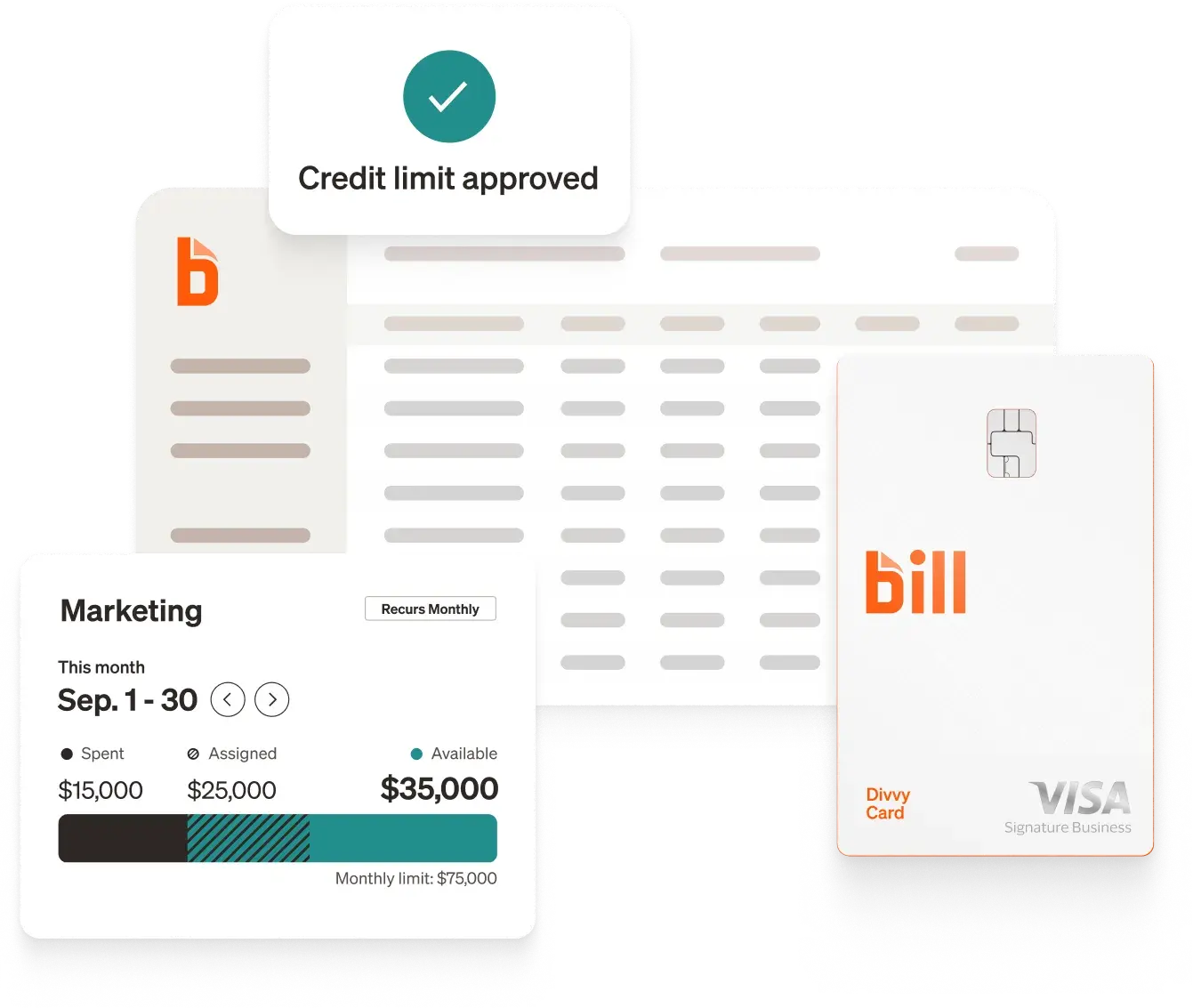
When you issue physical or virtual cards through BILL Spend & Expense, you can set spending parameters like which budgets, projects, and departments the card can spend on, along with spending limits and merchant controls. The transaction will only be authorized if a purchase matches the guidelines.

For company participants who outsource expense management services to an accounting firm and use spend management software, 96% agree that the combination enforces expense guidelines, and 97% agree that it ensures they control spend and stay within budget.

51% of SMBs owners who outsource expense management said their accounting firm implemented card-based spend management technology, and it has been a game changer for their company.

Why should accounting firms have spend management services on their CAS practice radar?

CAS offerings represent one of the fastest-growing practices in accounting firms, with a CPA.com and AICPA report finding that, “ … accounting firms which offered CAS services reported a median growth rate of 16% over the previous year, with double-digit growth being the norm since 2018.”

The survey report identified spend and expense management as an emerging CAS offering. It can provide a valuable and profitable competitive advantage while helping firms’ clients to increase spend transparency and control.

How to convert from traditional expense management

Not all expenses are causes for concern, with far more being necessary than questionable. For example, the purchase of a bottle of vodka would normally raise eyebrows. But for a theater, it’s used to clean costumes.

Regardless, a proactive approach to expense and spend management can help prevent outrageous purchases while increasing visibility into client spend. With the ability to set spending and budget limits, control card activity, and view all activity from a single dashboard, accountants can stay on top of their clients’ expenses while gathering real-time insight to inform cash flow management and more.

Learn more about offering spend and expense management services by downloading CPA.com’s full report.

You can also access the BILL Spend & Expense interactive demonstration, which highlights how simple it is to use and the benefits of managing a client’s business spend in one place.


Author
Michael Davis
Contributing writer, BILL
Michael specializes in helping businesses optimize financial operations by staying up-to-date with industry trends and translating insights into real-world applications. With expertise in AP, cash flow, and fintech, Michael breaks down complex topics to help businesses continue to grow.
Author
Michael Davis
Contributing writer, BILL
Michael specializes in helping businesses optimize financial operations by staying up-to-date with industry trends and translating insights into real-world applications. With expertise in AP, cash flow, and fintech, Michael breaks down complex topics to help businesses continue to grow.
Get more from BILL
Subscribe to finance insights and thought leadership content delivered straight to your inbox.
By continuing, you agree to BILL's Terms of Service and Privacy Notice.

Frequently asked questions

Dashboard mockup

Ready to bring AI to your finance team?

Take a demo with BILL to see how our integrated platform can provide your business with seamless AP, AR, and spend and expense management.

Request a Demo
The information provided on this page does not, and is not intended to constitute legal or financial advice and is for general informational purposes only. The content is provided "as-is"; no representations are made that the content is error free.

Software Comparison

BILL Spend & Expense
Best for AI expense automation
4.5 on G2
  • Smart corporate cards with real-time tracking, flexible limits, and instant visibility into every transaction across your team [1]
  • Unlimited free virtual cards with unique numbers for each vendor or subscription—freeze, delete, or set custom limits instantly to prevent overcharges and reduce fraud risk [5]
  • AI-powered auto-categorization and receipt matching that connects card transactions and expenses into a single reconciliation workflow [1]
  • Customizable budgets with spend controls based on merchant, amount, receipt requirements, and configurable approval workflows [3]
  • Auto-freeze on cards with incomplete transactions, ensuring receipts and documentation are captured before additional spend is approved [1]
  • Up to 7x points on restaurants, 5x on hotels, 2x on recurring software, and 1.5x on all other purchases (rates shown are for weekly or daily billing cycle; rates vary by billing frequency) [2]
  • Two-way sync with QuickBooks, NetSuite, Sage Intacct, Xero, and Microsoft Dynamics; additional integrations with Acumatica, Slack, and HRIS platforms [1]

Pros

  • $0/user/month with all features included—no paid tier to unlock [4]
  • Merchant controls and auto-freeze cards at no extra cost [1]
  • Credit lines that don't fluctuate daily based on bank balance [4]
  • All ERP integrations (NetSuite, Sage Intacct, Xero) included free [1]

Cons

  • 12-month holding period before rewards can be redeemed [2]
  • Category reward multipliers cap at $5,000/month per category [2]
  • Less established in global, enterprise-scale expense programs with multi-country regulatory requirements

BILL Spend & Expense pairs corporate cards with AI-powered expense management and budget controls in a single platform at no cost—teams aren't paying per user or upgrading to unlock features that competitors gate behind paid tiers.

Merchant-level spend controls and auto-freeze on incomplete transactions give admins granular oversight without manual policing, and two-way ERP integrations are included free where Ramp and Brex charge for NetSuite and Sage Intacct access. The main trade-off is an initial 12-month rewards holding period before accumulated points can be redeemed. [1][2][3][4]

Commonly compared to: Ramp and Brex (for card-first expense management), and SAP Concur (for enterprise expense programs).

Pricing
$0/user/month with no annual fee
Integrations
Two-way sync with QuickBooks, NetSuite, Sage Intacct, Xero, and Microsoft
Ideal company size
SMB to mid-market
SAP Concur
Best for large enterprises
4 on G2
  • AI-powered receipt capture via ExpenseIt on the SAP Concur mobile app, with smart matching that combines credit card charges and e-receipts into expense reports automatically [7]
  • Configurable approval workflows with built-in audit rules that flag policy exceptions, plus optional Intelligent Audit and Verify add-ons for automated compliance checks [6][7]
  • Modular product suite: Concur Expense, Concur Travel, and Concur Invoice are separate products that can be purchased individually or together, so organizations can start with expense management and add capabilities over time [6]
  • Bank card feed integrations that import corporate card transactions directly into expense reports for automatic reconciliation [6]
  • Joule, SAP's AI assistant, for expense report review, spend analysis, and cost estimation [6]
  • Budget tracking and monitoring tools that give finance teams visibility into spend against departmental or project-level budgets [6]
  • Support for global operations with multi-currency expense reporting and country-specific tax and regulatory compliance tools [6]
  • Pro: 300+ pre-built integrations including native SAP ERP sync [7][8]
  • Pro: Global coverage with multi-currency and regulatory compliance tools [6]
  • Pro: Modular—add travel or invoice management without switching platforms [6]
  • Pro: AI-powered receipt capture and smart matching via ExpenseIt [7]
  • Con: Quote-based pricing; no published rates on the website [6]
  • Con: No corporate card offering; relies on bank card feed integrations [6]
  • Con: Implementation can be complex for smaller organizations [6]
  • Con: Live support requires purchasing the User Support Desk service [6]

SAP Concur is the incumbent in expense management software, with the largest partner ecosystem and broadest global footprint on this list. Its modular approach gives large organizations flexibility to start with expense management and layer on travel or invoice capabilities independently.

The trade-off is complexity—pricing is opaque, there's no corporate card offering, and smaller teams may find the platform more than they need. Organizations already in the SAP ecosystem will get the most value from native S/4HANA integration. [6][7][8]

Commonly compared to: BILL (for SMB expense management), and Coupa (for enterprise spend management).

Pricing
Quote-based
Integrations
QuickBooks, Xero, Sage,TSheets, Gusto, & most business credit cards.
Ideal Company Size
Mid-market to enterprise
Ramp
Best for a broad spend platform
4.8 on G2
  • Corporate cards with customizable spend controls by merchant, category, employee, or department, plus unlimited virtual and physical cards [9][10]
  • AI-powered receipt matching, transaction coding, and memo suggestions that auto-populate as soon as a card is swiped [9]
  • Policy agent that reviews every expense against company policy, auto-approves compliant transactions, and escalates only exceptions with full audit trail [9]
  • Expense submission via SMS, Slack, or Microsoft Teams in addition to web and mobile app [9]
  • Reimbursements for out-of-pocket expenses paid to employees' bank accounts in 1–2 business days [9]
  • Real-time spend reporting with custom dashboards, natural-language queries, and proactive overspend alerts [9]
  • Broader spend platform that includes AP automation, procurement, vendor management, and treasury alongside expense management [9]

Pros

  • Free plan includes corporate cards, expenses, and bill pay [11]
  • AI policy agent reviews 100% of expenses automatically [9]
  • Submit expenses via SMS, Slack, or Teams—no app required [9]
  • Broader spend platform covers AP, procurement, and vendor management [9]

Cons

  • Budget tracking requires Ramp Plus at $15/user/month [11]
  • NetSuite, Sage Intacct, and Dynamics integrations require a paid plan [11]
  • HRIS syncs and auto-lock cards require a paid plan [11]
  • Credit limits fluctuate daily based on connected bank balance [12]

Ramp's strength is breadth—it's not just an expense tool but a full spend management platform that includes AP automation, procurement, and vendor management alongside expenses. The AI policy agent is a differentiator, reviewing every transaction against company rules rather than relying on manual manager approvals.

The trade-off is that several features mid-market teams rely on—budget tracking, ERP integrations beyond QuickBooks and Xero, and HRIS syncs—require upgrading to Ramp Plus at $15/user/month plus a platform fee. [9][11]

Commonly compared to: Brex and BILL (for corporate cards and expense management), and SAP Concur (for enterprise expense programs).

Pricing
$0/user/month
Integrations
QuickBooks, NetSuite, Xero, Sage Intacct, Slack, & 100+ accounting tools.
Ideal Company Size
Startups to mid-market
Brex
Best for global teams
4.8 on G2
  • Corporate cards with customizable spend limits by role, department, or category, plus auto-approve for in-policy expenses and auto-decline for out-of-policy spend [13][14]
  • AI-powered expense reviews that auto-approve compliant transactions and surface only exceptions for human review, with clear visibility into why a transaction is flagged [13]
  • Auto-generated receipts and memos with OCR that matches receipts in any language or currency, plus automatic GL coding by department, project, and entity [13]
  • Live Budgets that let department heads set top-level budgets, provision spend to individuals or teams, and track usage in real time with anomaly detection [13]
  • Global reimbursements in 70+ countries in employees' local currency, with subsidiaries able to issue reimbursements from local bank accounts [13]
  • Expense submission and approval via Slack and WhatsApp, with in-app commenting on individual transactions [13]
  • Broader financial platform that includes bill pay, business banking with up to 3.68% yield, and treasury alongside expense management [14]

Pros

  • Free plan includes corporate cards, expenses, bill pay, and travel [15]
  • AI expense reviews with 99% average policy compliance rate [14]
  • Global reimbursements in 70+ countries in local currency [13]
  • Live Budgets with real-time tracking and anomaly detection [13]

Cons

  • Live Budgets require Premium at $12/user/month [15]
  • HRIS syncs and customizable ERP integrations require a paid plan [15]
  • Credit limits fluctuate daily based on connected bank balance [16]
  • Multiple expense policies and dynamic review chains require Premium [15]

Brex positions itself as a full financial stack for startups—cards, expenses, banking, and treasury in one platform. The AI expense reviews and 99% average compliance rate (per Brex's internal metrics) are notable, and the global reimbursement coverage across 70+ countries is broader than most competitors on this list.

Like Ramp, Brex gates budget management and HRIS integrations behind a paid tier, and credit limits fluctuate daily based on your bank balance. Teams that need predictable spending power or are past the startup stage may find the pricing structure adds up. [13][14][15]

Commonly compared to: Ramp and BILL (for corporate cards and expense management), and SAP Concur (for enterprise expense programs).

Pricing
$0/user/month
Integrations
NetSuite, QuickBooks, Workday,SAP Concur, Slack, & global banking portals.
Ideal Company Size
Startups to mid-market
Expensify
Best for simple reimbursements
4.5 on G2
  • SmartScan receipt capture by photo, email forwarding (receipts@expensify.com), or text message; auto-extracts transaction details and categorizes expenses [17]
  • Bring-your-own-card support: link existing corporate cards from 10,000+ banks globally for automatic reconciliation without switching card providers [17]
  • Expensify Visa Commercial Card with cash back on US purchases; cash back first offsets the Expensify subscription cost, then flows to the company's bank account [17]
  • Concierge AI for automated expense categorization, policy violation flagging, rule enforcement, and error reduction [17]
  • Global reimbursements for employees and independent contractors in their local currency [17]
  • Chat-based collaboration directly on individual expenses to resolve questions in real time rather than through email follow-ups [17]
  • 45+ integrations including QuickBooks, NetSuite, Sage Intacct, Xero, Workday, and Gusto [17]

Pros

  • Bring-your-own-card from 10,000+ banks globally [17]
  • Expensify Card cash back can offset the subscription cost [17]
  • SmartScan receipt capture by photo, email, or text message [17]
  • 45+ integrations including major ERPs and payroll systems [17]

Cons

  • No free plan; starts at $5/user/month [18]
  • Pricing structure varies by card spend volume [18]
  • Budget management, advanced approvals, and expense policies require Collect or Control plans [17]
  • No department-level budget management on par with card-first platforms

Expensify's strength is accessibility—it has the lowest barrier to entry for teams that just need to start tracking expenses and submitting receipts. The bring-your-own-card support from 10,000+ banks means companies don't have to switch card providers, and the SmartScan receipt capture (by photo, email, or text) is one of the more flexible input methods on this list.

The trade-off is that several features mid-market teams expect—budget management, advanced approvals, and expense policies—require upgrading to the Collect or Control plans, and spend controls are primarily limited to the Expensify Card rather than extending across all connected cards. [17][18]

Commonly compared to: Zoho Expense (for budget-friendly expense management), and BILL and Ramp (for integrated cards and expenses).

Pricing
From $5/user/month
Integrations
QuickBooks, Xero, Sage, TSheets, Gusto, & most business credit cards.
Ideal Company Size
Small to mid-market
Zoho Expense
Best for budget-conscious teams
4.5 on G2
  • Autoscan receipt capture with OCR that auto-categorizes and itemizes each expense, plus the ability to split or tag expenses across departments, projects, or cost centers [19][20]
  • Automated per diem calculations with pre-defined rules based on country, location, and trip details for regional compliance [20]
  • Corporate card management with real-time feeds that automatically match transactions to uploaded receipts for faster reconciliation [20]
  • Mileage tracking with four input methods across Android, iPhone, and Apple Watch [20]
  • Configurable approval workflows, expense policies, and audit rules with detailed audit trails for compliance [19][20]
  • Custom modules, workflow automation, webhooks, and configurable UI elements for businesses that need tailored expense processes [19]
  • Active-user pricing model: only employees who actually create expenses are charged, so admins and approvers who don't submit reports are free [21]

Pros

  • Free plan available for up to 3 users with core expense tracking [21]
  • Active-user pricing—admins and approvers aren't charged [21]
  • Automated per diem calculations by country and location [20]
  • Deep customization with custom modules and workflow automation [19]

Cons

  • Corporate card feeds and multi-level approvals require Standard plan [21]
  • Deepest value requires the broader Zoho ecosystem (Books, People, CRM) [19]
  • No corporate card offering; relies on connecting existing cards [20]
  • Travel booking, per diem, and live budgets require Premium plan [21]

Zoho Expense offers unusually deep customization at a low price point—custom modules, workflow automation, webhooks, and configurable UI elements that most competitors don't expose. The active-user pricing model is genuinely cost-effective for companies where only a portion of employees submit expenses regularly.

The trade-off is that there's no corporate card offering—you'll need to connect your existing cards—and the platform delivers its deepest value when used alongside other Zoho products like Zoho Books and Zoho People. [19][20][21]

Commonly compared to: Expensify (for budget-friendly expense management), and SAP Concur (for global compliance and customization).

Pricing
Free (3 users); from $4/user/month
Integrations
Zoho Books, QuickBooks, Xero, Sage, Microsoft Dynamics, & Google Workspace.
Ideal Company Size
Small to mid-market