Blog
  /  
Budgeting
  /  
How to create an IT budget

How to create an IT budget

Michael Davis
Contributing writer, BILL
illustrated monitor and phone with dollar bill signsHeader imageHeader imageHeader imageHeader image
Table of contents
Get more from BILL
Subscribe to finance insights and thought leadership content delivered straight to your inbox.
By continuing, you agree to BILL's Terms of Service and Privacy Notice.

Your IT department keeps your business running in today’s digital age, so it’s critical that they have the resources they need to keep the lights on. In this article, we’ll outline the six steps you need to take to conceptualize, create, and execute an IT budget that serves your business strategy. Let’s go!

1. Audit your current IT budget

Do you know what you’re currently spending on IT? You need to begin with a thorough audit of your IT budgets for the past six months (or, ideally, a year) down to the penny. If you haven’t used a formal budget, just try to parse out all of the expenses your business has made which would fall into the IT budget.

Consider the following questions:

  • What are we spending on IT right now?
  • What are your fixed costs in IT?
  • What are your variable costs in IT?
  • Have we outlined discretionary expense examples?
  • Who are our regular or authorized IT spenders?
  • Have we stayed within spending goals or budgets?
  • What are our current goals in IT?
  • Do we have an emergency fund?

This is a critical baseline to lay before you dive into more complicated strategy and mathematics that will inform your future IT budget creation.

2. Compare with other IT budgets

You shouldn’t make major decisions based only on what your competitors are doing, but it’s important to make sure you’re on the right track. Severely overspending or underspending on your IT annual budget is an indication that something is off, and that you may need to refine your IT spending strategy.

One important consideration is that smaller businesses actually spend more of their revenue on IT than larger businesses. According to TechTarget, small businesses spend 6.9% of their revenue on IT, while larger companies spend only 3.2%. The study also revealed that spending more on IT isn’t always indicative of performance, and in fact successful businesses are careful with their IT spending.

Just because others are spending less on their monthly budget, doesn’t mean you have to trim (so long as you’re still a small, growing business). But you also should consider that other companies spending less could be out-performing you. Compare your IT spending with businesses that are your same size, as well as businesses in your same industry.

3. Identify needs and goals

Your budget doesn’t exist in a vacuum, and the whole goal of a budget is to help you access the resources you’ll need to execute your business strategy. Before you start doling out funds, you need to work as a team, top-down and bottom-up, to discuss your overall goals and the best way to meet them.

Get clear on business strategy

Does your company have a mission statement? Clearly defined OKRs? Involve the executive team for the big-picture goals and overall strategy, but also include the feedback of IT employees for more ground-level goals to keep things running smoothly and for realistic execution of the strategy.

We recommend setting explicit OKRs (objectives and key results) so everyone is on the same page about where the company is headed. Your OKRs will make it easier to determine project budget breakdowns and sub targets for monthly fixed expense goals. This will come in handy when it’s time to outline discretionary expenses—trust us.

Look for gaps

When you know what you’re already spending and using, you will inevitably start to identify some of the gaps in your IT budget. As you work with your executive team and IT crew on OKRs you’ll start to see the outlines of a roadmap. What do you need, right now, to meet those goals? Your list of needs might include hardware, software, additional licenses, hiring needs, raises, and workplace assets. These needs should be factored into your annual budget, even if they won’t always show up in monthly budgets or fixed expenses.

Be smart

It’s tempting to balance your boring monthly income budget with more exciting wish list expenses. But smart financial leaders will pay closer attention to the invisible or unsavory aspects of your variable expenses. Debt repayments, recurring expenses, unexpected expenses, and emergency funds are important elements to any IT business budget.

4. Improve budget tracking

Your budget will start to take shape as you’ve worked through the preceding steps, but it won’t mean much unless you can see it in action. It’s time to nail down your data collection and analysis as it pertains to your budget and asset management.

Here’s how you take your IT budget tracking to the next level:

  1. Create an initial business budget
  2. Utilize accounting and expense management software to track all spend
  3. Invest in asset management tracking software (or create your own method)
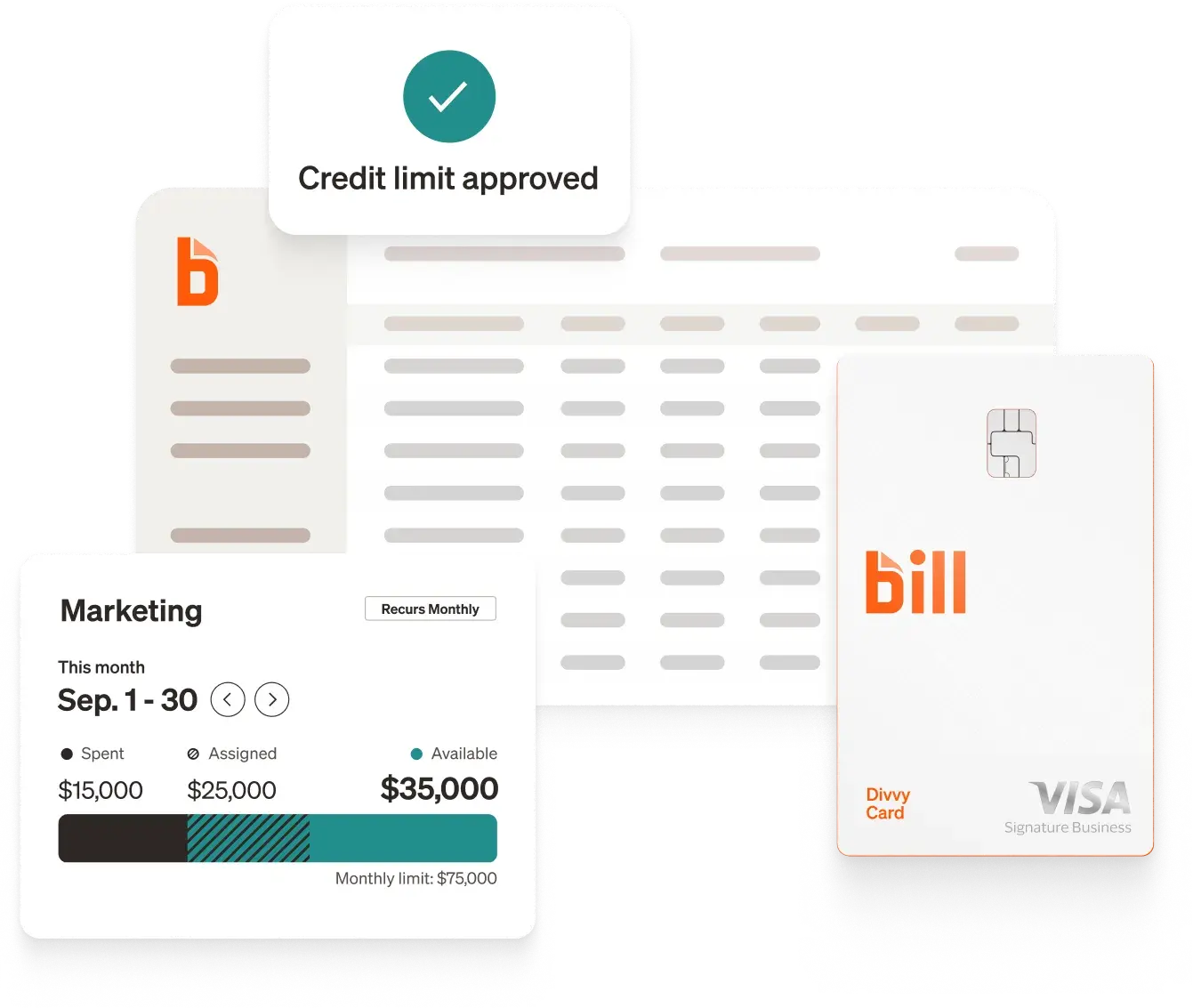
  4. Start using virtual cards and corporate cards for every employee to increase visibility and security

The needs of IT are different than most of the departments within the company, so don’t be afraid to change the way your specific team does budgets and expenses.

5. Get team buy-in

We’ve mentioned this in nearly every step, and that’s because it’s a key piece of budgeting strategy. Without team understanding and buy-in, your budget is simply a hypothetical list of numbers. For a successful budget, you need input and understanding from the people who will actually be using it.

Gather feedback from your IT team about their priorities, wish list purchases, how they spend, and what they understand the overall company goals to be. You can and should control budget spend, but it’s best if your team actually wants to fulfill budget expectations.

6. Set a cadence for communication & iteration

Please don’t set-it-and-forget-it. Your IT budget should be flexible and ongoing. Set up regular budget checks—that means not after the quarter has concluded. Review budgets monthly at the very least, but ideally each week. Take note of budgets which aren’t being used, or the ones repeatedly going over-budget. What will you do with a surplus? Which budgets can back up the ones most likely to go over?

Seek feedback and other communication from your IT employees at a regular cadence which makes sense for your business. Be sure to actually incorporate the reasonable feedback you receive—or you’ll stop getting feedback altogether. At least once a year we recommend that you conduct some basic corporate budgeting exercises to look at your spending with fresh eyes.

An IT budget that works

These steps (repeated as necessary) can help you create a strategy and budget that doesn’t leave you flying blind in the world of hardware and software. As your company grows, it becomes even more important to manage your IT needs. We’re here to support you through it.

Expense management software that manages budgets, automatic expense reports, and flexible credit. Did we mention it’s free? Sign up for everything BILL has to offer today.

Author
Michael Davis
Contributing writer, BILL
Michael specializes in helping businesses optimize financial operations by staying up-to-date with industry trends and translating insights into real-world applications. With expertise in AP, cash flow, and fintech, Michael breaks down complex topics to help businesses continue to grow.
Author
Michael Davis
Contributing writer, BILL
Michael specializes in helping businesses optimize financial operations by staying up-to-date with industry trends and translating insights into real-world applications. With expertise in AP, cash flow, and fintech, Michael breaks down complex topics to help businesses continue to grow.
Get more from BILL
Subscribe to finance insights and thought leadership content delivered straight to your inbox.
By continuing, you agree to BILL's Terms of Service and Privacy Notice.

Frequently asked questions

Dashboard mockup

Ready to bring AI to your finance team?

Take a demo with BILL to see how our integrated platform can provide your business with seamless AP, AR, and spend and expense management.

Request a Demo
The information provided on this page does not, and is not intended to constitute legal or financial advice and is for general informational purposes only. The content is provided "as-is"; no representations are made that the content is error free.

Software Comparison

BILL Spend & Expense
Best for AI expense automation
4.5 on G2
  • Smart corporate cards with real-time tracking, flexible limits, and instant visibility into every transaction across your team [1]
  • Unlimited free virtual cards with unique numbers for each vendor or subscription—freeze, delete, or set custom limits instantly to prevent overcharges and reduce fraud risk [5]
  • AI-powered auto-categorization and receipt matching that connects card transactions and expenses into a single reconciliation workflow [1]
  • Customizable budgets with spend controls based on merchant, amount, receipt requirements, and configurable approval workflows [3]
  • Auto-freeze on cards with incomplete transactions, ensuring receipts and documentation are captured before additional spend is approved [1]
  • Up to 7x points on restaurants, 5x on hotels, 2x on recurring software, and 1.5x on all other purchases (rates shown are for weekly or daily billing cycle; rates vary by billing frequency) [2]
  • Two-way sync with QuickBooks, NetSuite, Sage Intacct, Xero, and Microsoft Dynamics; additional integrations with Acumatica, Slack, and HRIS platforms [1]
  • Pro: $0/user/month with all features included—no paid tier to unlock [4]
  • Pro: Merchant controls and auto-freeze cards at no extra cost [1]
  • Pro: Credit lines that don't fluctuate daily based on bank balance [4]
  • Pro: All ERP integrations (NetSuite, Sage Intacct, Xero) included free [1]
  • Con: 12-month holding period before rewards can be redeemed [2]
  • Con: Category reward multipliers cap at $5,000/month per category [2]
  • Con: Less established in global, enterprise-scale expense programs with multi-country regulatory requirements

BILL Spend & Expense pairs corporate cards with AI-powered expense management and budget controls in a single platform at no cost—teams aren't paying per user or upgrading to unlock features that competitors gate behind paid tiers.

Merchant-level spend controls and auto-freeze on incomplete transactions give admins granular oversight without manual policing, and two-way ERP integrations are included free where Ramp and Brex charge for NetSuite and Sage Intacct access. The main trade-off is an initial 12-month rewards holding period before accumulated points can be redeemed. [1][2][3][4]

Commonly compared to: Ramp and Brex (for card-first expense management), and SAP Concur (for enterprise expense programs).

Pricing
$0/user/month with no annual fee
Integrations
Two-way sync with QuickBooks, NetSuite, Sage Intacct, Xero, and Microsoft
Ideal company size
SMB to mid-market
SAP Concur
Best for large enterprises
4 on G2
  • AI-powered receipt capture via ExpenseIt on the SAP Concur mobile app, with smart matching that combines credit card charges and e-receipts into expense reports automatically [7]
  • Configurable approval workflows with built-in audit rules that flag policy exceptions, plus optional Intelligent Audit and Verify add-ons for automated compliance checks [6][7]
  • Modular product suite: Concur Expense, Concur Travel, and Concur Invoice are separate products that can be purchased individually or together, so organizations can start with expense management and add capabilities over time [6]
  • Bank card feed integrations that import corporate card transactions directly into expense reports for automatic reconciliation [6]
  • Joule, SAP's AI assistant, for expense report review, spend analysis, and cost estimation [6]
  • Budget tracking and monitoring tools that give finance teams visibility into spend against departmental or project-level budgets [6]
  • Support for global operations with multi-currency expense reporting and country-specific tax and regulatory compliance tools [6]
  • Pro: 300+ pre-built integrations including native SAP ERP sync [7][8]
  • Pro: Global coverage with multi-currency and regulatory compliance tools [6]
  • Pro: Modular—add travel or invoice management without switching platforms [6]
  • Pro: AI-powered receipt capture and smart matching via ExpenseIt [7]
  • Con: Quote-based pricing; no published rates on the website [6]
  • Con: No corporate card offering; relies on bank card feed integrations [6]
  • Con: Implementation can be complex for smaller organizations [6]
  • Con: Live support requires purchasing the User Support Desk service [6]

SAP Concur is the incumbent in expense management software, with the largest partner ecosystem and broadest global footprint on this list. Its modular approach gives large organizations flexibility to start with expense management and layer on travel or invoice capabilities independently.

The trade-off is complexity—pricing is opaque, there's no corporate card offering, and smaller teams may find the platform more than they need. Organizations already in the SAP ecosystem will get the most value from native S/4HANA integration. [6][7][8]

Commonly compared to: BILL (for SMB expense management), and Coupa (for enterprise spend management).

  • Best for: Mid-market and enterprise organizations that need a globally scalable expense management platform with configurable compliance tools and a large partner ecosystem. [6][7][8]
  • Highlights: AI-powered receipt capture via ExpenseIt, configurable approval workflows with built-in audit rules, optional Intelligent Audit and Verify add-ons for automated compliance checks, 300+ app integrations, and native SAP ERP sync. [6][7][8]
  • Ideal if you need: An expense platform that integrates natively with SAP S/4HANA or other enterprise ERPs, with the flexibility to add modules like Concur Travel or Concur Invoice over time. [6][7]
Pricing
Quote-based
Integrations
QuickBooks, Xero, Sage,TSheets, Gusto, & most business credit cards.
Ideal Company Size
Mid-market to enterprise
Ramp
Best for a broad spend platform
4.8 on G2
  • Corporate cards with customizable spend controls by merchant, category, employee, or department, plus unlimited virtual and physical cards [9][10]
  • AI-powered receipt matching, transaction coding, and memo suggestions that auto-populate as soon as a card is swiped [9]
  • Policy agent that reviews every expense against company policy, auto-approves compliant transactions, and escalates only exceptions with full audit trail [9]
  • Expense submission via SMS, Slack, or Microsoft Teams in addition to web and mobile app [9]
  • Reimbursements for out-of-pocket expenses paid to employees' bank accounts in 1–2 business days [9]
  • Real-time spend reporting with custom dashboards, natural-language queries, and proactive overspend alerts [9]
  • Broader spend platform that includes AP automation, procurement, vendor management, and treasury alongside expense management [9]
  • Pro: Free plan includes corporate cards, expenses, and bill pay [11]
  • Pro: AI policy agent reviews 100% of expenses automatically [9]
  • Pro: Submit expenses via SMS, Slack, or Teams—no app required [9]
  • Pro: Broader spend platform covers AP, procurement, and vendor management [9]
  • Con: Budget tracking requires Ramp Plus at $15/user/month [11]
  • Con: NetSuite, Sage Intacct, and Dynamics integrations require a paid plan [11]
  • Con: HRIS syncs and auto-lock cards require a paid plan [11]
  • Con: Credit limits fluctuate daily based on connected bank balance [12]

Ramp's strength is breadth—it's not just an expense tool but a full spend management platform that includes AP automation, procurement, and vendor management alongside expenses. The AI policy agent is a differentiator, reviewing every transaction against company rules rather than relying on manual manager approvals.

The trade-off is that several features mid-market teams rely on—budget tracking, ERP integrations beyond QuickBooks and Xero, and HRIS syncs—require upgrading to Ramp Plus at $15/user/month plus a platform fee. [9][11]

Commonly compared to: Brex and BILL (for corporate cards and expense management), and SAP Concur (for enterprise expense programs).

  • Best for: Fast-growing companies that want corporate cards, expense management, and accounts payable on a single platform with AI-powered automation. [9][10]
  • Highlights: Corporate cards with built-in spend controls, AI-powered receipt matching and expense coding, a policy agent that reviews 100% of expenses and flags only exceptions, and submission via SMS, Slack, or Microsoft Teams. [9][10]
  • Ideal if you need: A card-first platform where expense management is one part of a larger system that also covers AP, procurement, and vendor management. [9]
Pricing
$0/user/month
Integrations
QuickBooks, NetSuite, Xero, Sage Intacct, Slack, & 100+ accounting tools.
Ideal Company Size
Startups to mid-market
Brex
Best for global teams
4.8 on G2
  • Corporate cards with customizable spend limits by role, department, or category, plus auto-approve for in-policy expenses and auto-decline for out-of-policy spend [13][14]
  • AI-powered expense reviews that auto-approve compliant transactions and surface only exceptions for human review, with clear visibility into why a transaction is flagged [13]
  • Auto-generated receipts and memos with OCR that matches receipts in any language or currency, plus automatic GL coding by department, project, and entity [13]
  • Live Budgets that let department heads set top-level budgets, provision spend to individuals or teams, and track usage in real time with anomaly detection [13]
  • Global reimbursements in 70+ countries in employees' local currency, with subsidiaries able to issue reimbursements from local bank accounts [13]
  • Expense submission and approval via Slack and WhatsApp, with in-app commenting on individual transactions [13]
  • Broader financial platform that includes bill pay, business banking with up to 3.68% yield, and treasury alongside expense management [14]
  • Pro: Free plan includes corporate cards, expenses, bill pay, and travel [15]
  • Pro: AI expense reviews with 99% average policy compliance rate [14]
  • Pro: Global reimbursements in 70+ countries in local currency [13]
  • Pro: Live Budgets with real-time tracking and anomaly detection [13]
  • Con: Live Budgets require Premium at $12/user/month [15]
  • Con: HRIS syncs and customizable ERP integrations require a paid plan [15]
  • Con: Credit limits fluctuate daily based on connected bank balance [16]
  • Con: Multiple expense policies and dynamic review chains require Premium [15]

Brex positions itself as a full financial stack for startups—cards, expenses, banking, and treasury in one platform. The AI expense reviews and 99% average compliance rate (per Brex's internal metrics) are notable, and the global reimbursement coverage across 70+ countries is broader than most competitors on this list.

Like Ramp, Brex gates budget management and HRIS integrations behind a paid tier, and credit limits fluctuate daily based on your bank balance. Teams that need predictable spending power or are past the startup stage may find the pricing structure adds up. [13][14][15]

Commonly compared to: Ramp and BILL (for corporate cards and expense management), and SAP Concur (for enterprise expense programs).

  • Best for: Startups and high-growth companies that want a global financial platform covering corporate cards, expense management, bill pay, and business banking. [13][14]
  • Highlights: AI-powered expense reviews that auto-approve compliant transactions, corporate cards with built-in policy controls, Live Budgets for real-time tracking, global reimbursements in 70+ countries, and OCR receipt matching in any language or currency. [13][14]
  • Ideal if you need: A financial platform built for startups that includes expense management as part of a broader stack with banking, treasury, and AP. [13][14]
Pricing
$0/user/month
Integrations
NetSuite, QuickBooks, Workday,SAP Concur, Slack, & global banking portals.
Ideal Company Size
Startups to mid-market
Expensify
Best for simple reimbursements
4.5 on G2
  • SmartScan receipt capture by photo, email forwarding (receipts@expensify.com), or text message; auto-extracts transaction details and categorizes expenses [17]
  • Bring-your-own-card support: link existing corporate cards from 10,000+ banks globally for automatic reconciliation without switching card providers [17]
  • Expensify Visa Commercial Card with cash back on US purchases; cash back first offsets the Expensify subscription cost, then flows to the company's bank account [17]
  • Concierge AI for automated expense categorization, policy violation flagging, rule enforcement, and error reduction [17]
  • Global reimbursements for employees and independent contractors in their local currency [17]
  • Chat-based collaboration directly on individual expenses to resolve questions in real time rather than through email follow-ups [17]
  • 45+ integrations including QuickBooks, NetSuite, Sage Intacct, Xero, Workday, and Gusto [17]
  • Pro: Bring-your-own-card from 10,000+ banks globally [17]
  • Pro: Expensify Card cash back can offset the subscription cost [17]
  • Pro: SmartScan receipt capture by photo, email, or text message [17]
  • Pro: 45+ integrations including major ERPs and payroll systems [17]
  • Con: No free plan; starts at $5/user/month [18]
  • Con: Pricing structure varies by card spend volume [18]
  • Con: Budget management, advanced approvals, and expense policies require Collect or Control plans [17]
  • Con: No department-level budget management on par with card-first platforms

Expensify's strength is accessibility—it has the lowest barrier to entry for teams that just need to start tracking expenses and submitting receipts. The bring-your-own-card support from 10,000+ banks means companies don't have to switch card providers, and the SmartScan receipt capture (by photo, email, or text) is one of the more flexible input methods on this list.

The trade-off is that several features mid-market teams expect—budget management, advanced approvals, and expense policies—require upgrading to the Collect or Control plans, and spend controls are primarily limited to the Expensify Card rather than extending across all connected cards. [17][18]

Commonly compared to: Zoho Expense (for budget-friendly expense management), and BILL and Ramp (for integrated cards and expenses).

  • Best for: Small and midsize businesses that want a mobile-first expense management tool with flexible card options, including the ability to link existing corporate cards from 10,000+ banks. [17]
  • Highlights: SmartScan receipt capture by photo, email, or text message; bring-your-own-card support from 10,000+ banks globally; Expensify Visa Commercial Card with cash back that offsets subscription costs; and Concierge AI for automated categorization and policy enforcement. [17]
  • Ideal if you need: A lower-cost entry point for expense management where employees can start submitting receipts immediately without switching corporate card providers. [17]
Pricing
From $5/user/month
Integrations
QuickBooks, Xero, Sage, TSheets, Gusto, & most business credit cards.
Ideal Company Size
Small to mid-market
Zoho Expense
Best for budget-conscious teams
4.5 on G2
  • Autoscan receipt capture with OCR that auto-categorizes and itemizes each expense, plus the ability to split or tag expenses across departments, projects, or cost centers [19][20]
  • Automated per diem calculations with pre-defined rules based on country, location, and trip details for regional compliance [20]
  • Corporate card management with real-time feeds that automatically match transactions to uploaded receipts for faster reconciliation [20]
  • Mileage tracking with four input methods across Android, iPhone, and Apple Watch [20]
  • Configurable approval workflows, expense policies, and audit rules with detailed audit trails for compliance [19][20]
  • Custom modules, workflow automation, webhooks, and configurable UI elements for businesses that need tailored expense processes [19]
  • Active-user pricing model: only employees who actually create expenses are charged, so admins and approvers who don't submit reports are free [21]
  • Pro: Free plan available for up to 3 users with core expense tracking [21]
  • Pro: Active-user pricing—admins and approvers aren't charged [21]
  • Pro: Automated per diem calculations by country and location [20]
  • Pro: Deep customization with custom modules and workflow automation [19]
  • Con: Corporate card feeds and multi-level approvals require Standard plan [21]
  • Con: Deepest value requires the broader Zoho ecosystem (Books, People, CRM) [19]
  • Con: No corporate card offering; relies on connecting existing cards [20]
  • Con: Travel booking, per diem, and live budgets require Premium plan [21]

Zoho Expense offers unusually deep customization at a low price point—custom modules, workflow automation, webhooks, and configurable UI elements that most competitors don't expose. The active-user pricing model is genuinely cost-effective for companies where only a portion of employees submit expenses regularly.

The trade-off is that there's no corporate card offering—you'll need to connect your existing cards—and the platform delivers its deepest value when used alongside other Zoho products like Zoho Books and Zoho People. [19][20][21]

Commonly compared to: Expensify (for budget-friendly expense management), and SAP Concur (for global compliance and customization).

  • Best for: Small and midsize businesses that want an affordable, highly customizable expense management platform with strong global compliance features and active-user pricing. [19][20][21]
  • Highlights: Autoscan receipt capture with OCR, automated per diem calculations by country and location, corporate card reconciliation with real-time feeds, mileage tracking across multiple input methods, and active-user pricing starting at $4/user/month. [19][20][21]
  • Ideal if you need: A low-cost expense management tool with deep customization options and native integration with the broader Zoho ecosystem (Zoho Books, Zoho People, Zoho CRM). [19][20]
Pricing
Free (3 users); from $4/user/month
Integrations
Zoho Books, QuickBooks, Xero, Sage, Microsoft Dynamics, & Google Workspace.
Ideal Company Size
Small to mid-market