Blog
  /  
Capital
  /  
17 small business grants for women

17 small business grants for women

Michael Davis
Contributing writer, BILL
illustrated bankHeader imageHeader imageHeader imageHeader image
Table of contents
Get more from BILL
Subscribe to finance insights and thought leadership content delivered straight to your inbox.
By continuing, you agree to BILL's Terms of Service and Privacy Notice.
Check out additional BILL resources
Learn more

We’re celebrating women-owned businesses in our own inimitable way—with a comprehensive guide to small business grants for women.

Before we dive in, let’s define small business grants for women. Business grants are private or government-funded programs that offer free money to qualified recipients. They are not loans or lines of credit, so you do not have to pay them back.

For women entrepreneurs, grants offer a way to raise much-needed capital for your business through specialized programs. They are often run by non-profits or private organizations outside traditional financial channels. It is important to understand what options are available so you can plan strategically for business growth.

Key takeaways

There are federal, state, and private grants for women business owners.

Research grant criteria, prepare a strong business plan, and reach out to grant officers for guidance.

BILL Spend & Expense budgets allows you to set spending controls to keep your entire team on budget for grants received.

The ultimate guide to small business grants for women

Grants for women-owned small businesses may have specific qualifying criteria attached to them, so it’s critical to research each offer to ensure you qualify before you apply. Competition for funding is quite fierce, so don’t put time into a grant that you have no chance of winning. 

The following list details some of the requirements to apply, but not all; we suggest you visit each site individually to be sure you understand the scope of the grant program.

Federal government grants for women

1. Grants.gov

Grants.gov is a vast database of federal grants. However, it’s not solely tailored to women, nor is it focused exclusively on small businesses. There’s a lot of information here, and it will take some time to sift through it. Use their search engine to filter and drill down to the results you’re looking for.

2. Small Business Innovation Research and Small Business Technology Transfer programs

These initiatives are facilitated by the Small Business Association (SBA) and are specific to select industries, including health and human services, agriculture, education, and defense. There are numerous other eligibility requirements, so check them carefully before applying.

State and local small business grants for women entrepreneurs and small business owners

3. Women’s Business Centers

There are more than 100 SBA-sponsored Women’s Business Centers in the United States, each dedicated to providing women business owners and entrepreneurs with access to funding and business development resources. Whether you have an established business or are just getting ready to launch a new business idea, WBCs offer a range of services, including training, coaching, access to federal contracts, credit, and funding opportunities.

4. Economic development administration

Most geographical areas, cities, and states have economic development offices focused on strengthening the local economy. The U.S. Economic Development Association maintains a database of regional EDA offices and contacts to help you find one in your area. These offices cater to all business owners, not just women, but if you ask the right questions, you’ll be able to find out about available small business grants for women.

5. Small Business Development Centers

Small Business Development Centers (SBDCs) are often located on college campuses and offer free business counseling services for business plan creation, market research, crowdfunding, and securing financing from grants and small business loan programs. Many also have programs geared toward women and minority business owners, like the Minority and Women Business Enterprise Certification, which will give you a distinct advantage when competing for business. 

Private small-business grant money for women 

6. Amber Grant

The Amber Grant for Women is a $10,000 grant exclusively for women-led businesses and entrepreneurs. They award one grant per month, and at the end of the year, they choose two recipients out of their past awardees to receive an additional $25,000. Amber Grants for Women has recently expanded to include grants for specific business categories, so you could be considered for a $10,000 award when your industry month comes up. For example, February is Health and Fitness month; March is Food and Beverage.

7. IFundWomen Universal Grant Application Database

IFundWomen provides coaching, community, and support for women entrepreneurs. Their database works like this: you sign up and create your profile, and when funding programs come up that you qualify for, they’ll send you an invitation to apply. Some of their past funding partners include Visa, American Express, Unilever, Adidas, and Neutrogena. Their website also offers tons of information and opportunities for women founders, including mentorship, coaching, and more.

8. Cartier Women’s Initiative Awards

The Cartier Women’s Initiative Awards offers three grants to early-stage women-owned businesses. First place awardees are granted $100,000, second place is $60,000, and third place is $30,000. Additionally, recipients benefit through high-level executive coaching and training workshops to help them take their efforts to the next level. 

9.  Visa “She’s Next”

Visa She’s Next Grant Program is dedicated to Black women-owned B2C businesses that have been in business for a minimum of two years. Access more info and get notified when the window opens again through iFundWomen.  

10.  FedEx Small Business Grant

The FedEx Small Business Grant is open to both men and women. However, it’s worth noting that their policy is equitable between genders. They run the program like a contest, allowing the public to vote for their favorite contestant. Three grand prize winners receive $50,000, and seven first-place winners receive $20,000, along with extensive media coverage under the FedEx brand and other high-value business services.

11.  National Association for the Self-Employed Growth Grants

The NASE offers small business grants up to $4,000, which can be used to purchase new equipment or software, train new employees, boost your marketing, or apply to any number of business growth initiatives. To apply, you’ll need to become a NASE member, and in some cases, there is a waiting period before you can apply—so get going!

Other grant opportunities

Below are a few more resources to help you find small business grants for women. Although some do not offer grants, per se, they do provide valuable resources and training for women entrepreneurs.

12.  IdeaCafe Grant

IdeaCafe Grant is open to both men and women. It’s free to apply, and if your business is selected, you can receive $1,000 in micro-grant funding. They only award one grant per year, and the application window closes at the end of January.

13.  GrantsforWomen.org

GrantsForWomen.org is an extensive database of granting resources to help women entrepreneurs locate and apply for grants to help them launch or grow businesses. You’ll also find info on non-business-related funding and resources, like scholarships, mental health support, and lots more. Set aside some time as the listing is alphabetical, and there are no sorting or filtering options to help you narrow your search.

14.  The Halstead Grant

The Halstead Grant provides a cash grant of $7,500 plus $1,000 credit towards Halstead jewelry supplies. It is offered exclusively to women who own companies in the jewelry industry, mostly jewelry designers whose businesses are less than five years old. Even if you don’t win the grant, you’ll benefit from feedback on your portfolio and application from top professionals in the industry to help you improve.

15.  37 Angels

37 Angels is a group of female angel investors that invest exclusively in women-owned businesses. If you’re invited to pitch, funding from the angel investor group ranges from $50,000 to $200,000. You’ll also find tons of curated resources and professional development opportunities on the website, each designed to help you achieve your business goals. Once accepted for membership, you’ll have a chance to be chosen to pitch.

16.  Visa Everywhere Initiative

Visa Everywhere is a regional program for B2C and B2B companies that deliver innovative payment and commerce solutions. Software companies, blockchain, lenders, merchant services, and retail technology are just a few of the key areas they focus on. Prizes range from a $10,000 third-place award to $100,000 for the top slot, with an additional award going to local and regional entrants in key geographical areas.

17.  Veteran Women Igniting the Spirit of Entrepreneurship (V-WISE)

Open to women veterans and spouses of veterans, V-WISE offers resources and business training to help women launch, develop, and grow new businesses. They offer several low-cost online programs, some of which include one-on-one mentorship, networking opportunities, and more.

Small Business Grants for Women: Getting Ready to Apply

Every small business grant for women has its own set of requirements. Some applications, like the Amber Grant, are quite simple and prioritize the story over hard business data and pitch decks. Others, like those offered through the federal government or the SBA, will ask for more granular data. Either way, it’s imperative to read the instructions before you start the application so you don’t get frustrated along the way.

Tips for applying to grants

Here are a few quick tips to help you in your grant application journey:

  • Understand the granting organization’s specific criteria and priorities. This little detail is essential, as it will help you get a sense of whether you are a good fit for the grant or not. There’s no point applying to something you have little chance of winning.
  • Look up past winners to get a sense of what they have funded in the past. Sometimes, identifying a common thread in past grant recipients makes it easier to understand what they like to promote.
  • Work on your business plan to ensure it’s clear and polished. This is always a good idea because you’ll need a solid business plan for all kinds of things, including being able to prove your business model’s viability and market fit.
  • Be concise on the application. Run your ideas by people you trust to ensure everything flows and makes sense.
  • Open the lines of communication with the grant officers. They are the best people to speak to if you have questions—they want to see you succeed!

How BILL can help businesses manage grant budgets

Whether you're using those funds for business operations, or to pay and get paid, BILL simplifies the entire process for small businesses with BILL Spend & Expense, AP and AR, and more. 

Looking for better visibility and control over your spending, enforceable budgets, or a quicker, easier way to pay bills? Try a demo of BILL to explore all the tools at your disposal.

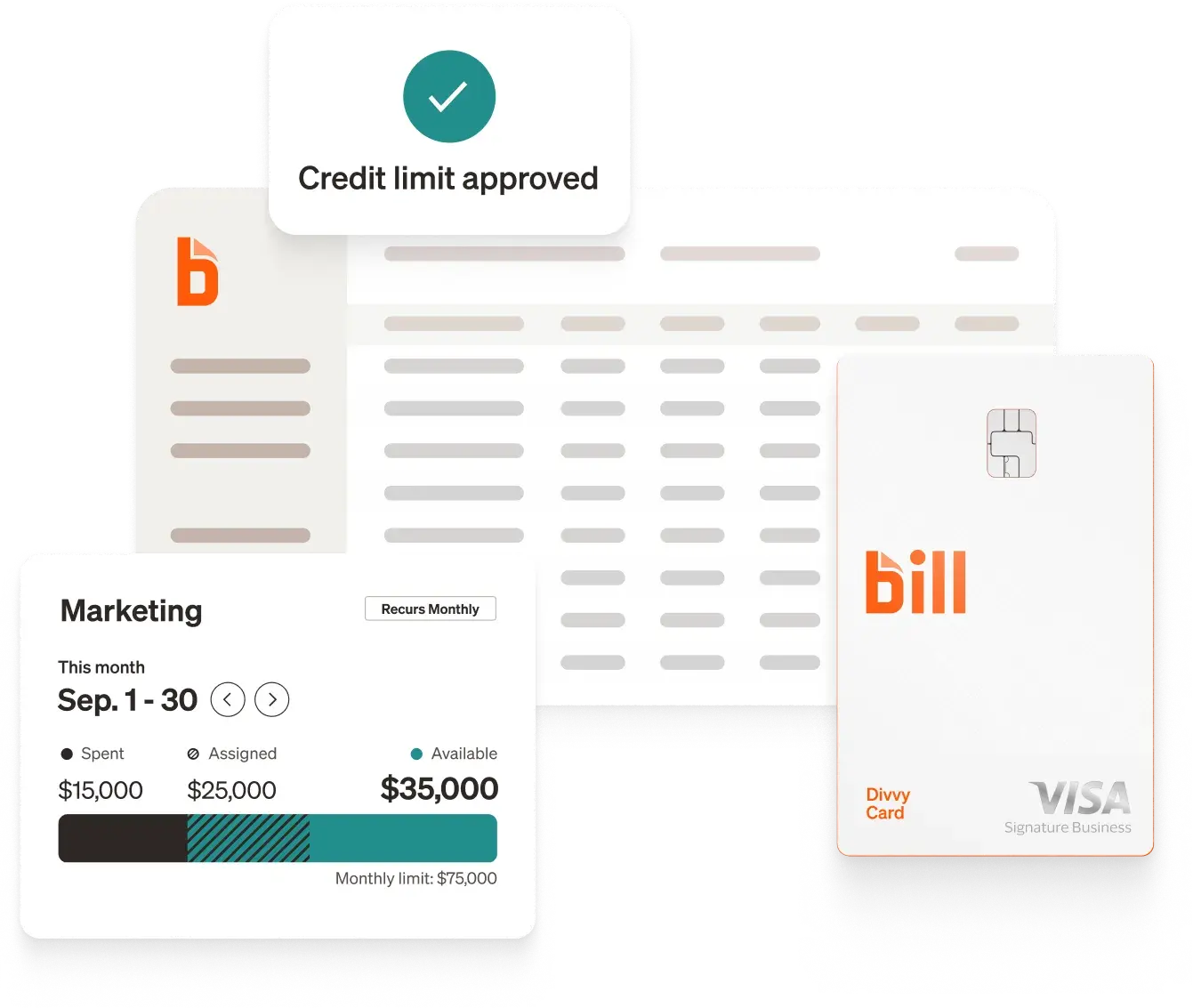
Total budget control. Zero guesswork. That’s BILL Spend & Expense.
Author
Michael Davis
Contributing writer, BILL
Michael specializes in helping businesses optimize financial operations by staying up-to-date with industry trends and translating insights into real-world applications. With expertise in AP, cash flow, and fintech, Michael breaks down complex topics to help businesses continue to grow.
Author
Michael Davis
Contributing writer, BILL
Michael specializes in helping businesses optimize financial operations by staying up-to-date with industry trends and translating insights into real-world applications. With expertise in AP, cash flow, and fintech, Michael breaks down complex topics to help businesses continue to grow.
Get more from BILL
Subscribe to finance insights and thought leadership content delivered straight to your inbox.
By continuing, you agree to BILL's Terms of Service and Privacy Notice.
Check out additional BILL resources
Learn more

Frequently asked questions

Dashboard mockup

Ready to bring AI to your finance team?

Take a demo with BILL to see how our integrated platform can provide your business with seamless AP, AR, and spend and expense management.

Request a Demo
The information provided on this page does not, and is not intended to constitute legal or financial advice and is for general informational purposes only. The content is provided "as-is"; no representations are made that the content is error free.

Software Comparison

BILL Spend & Expense
Best for AI expense automation
4.5 on G2
  • Smart corporate cards with real-time tracking, flexible limits, and instant visibility into every transaction across your team [1]
  • Unlimited free virtual cards with unique numbers for each vendor or subscription—freeze, delete, or set custom limits instantly to prevent overcharges and reduce fraud risk [5]
  • AI-powered auto-categorization and receipt matching that connects card transactions and expenses into a single reconciliation workflow [1]
  • Customizable budgets with spend controls based on merchant, amount, receipt requirements, and configurable approval workflows [3]
  • Auto-freeze on cards with incomplete transactions, ensuring receipts and documentation are captured before additional spend is approved [1]
  • Up to 7x points on restaurants, 5x on hotels, 2x on recurring software, and 1.5x on all other purchases (rates shown are for weekly or daily billing cycle; rates vary by billing frequency) [2]
  • Two-way sync with QuickBooks, NetSuite, Sage Intacct, Xero, and Microsoft Dynamics; additional integrations with Acumatica, Slack, and HRIS platforms [1]
  • Pro: $0/user/month with all features included—no paid tier to unlock [4]
  • Pro: Merchant controls and auto-freeze cards at no extra cost [1]
  • Pro: Credit lines that don't fluctuate daily based on bank balance [4]
  • Pro: All ERP integrations (NetSuite, Sage Intacct, Xero) included free [1]
  • Con: 12-month holding period before rewards can be redeemed [2]
  • Con: Category reward multipliers cap at $5,000/month per category [2]
  • Con: Less established in global, enterprise-scale expense programs with multi-country regulatory requirements

BILL Spend & Expense pairs corporate cards with AI-powered expense management and budget controls in a single platform at no cost—teams aren't paying per user or upgrading to unlock features that competitors gate behind paid tiers.

Merchant-level spend controls and auto-freeze on incomplete transactions give admins granular oversight without manual policing, and two-way ERP integrations are included free where Ramp and Brex charge for NetSuite and Sage Intacct access. The main trade-off is an initial 12-month rewards holding period before accumulated points can be redeemed. [1][2][3][4]

Commonly compared to: Ramp and Brex (for card-first expense management), and SAP Concur (for enterprise expense programs).

Pricing
$0/user/month with no annual fee
Integrations
Two-way sync with QuickBooks, NetSuite, Sage Intacct, Xero, and Microsoft
Ideal company size
SMB to mid-market
SAP Concur
Best for large enterprises
4 on G2
  • AI-powered receipt capture via ExpenseIt on the SAP Concur mobile app, with smart matching that combines credit card charges and e-receipts into expense reports automatically [7]
  • Configurable approval workflows with built-in audit rules that flag policy exceptions, plus optional Intelligent Audit and Verify add-ons for automated compliance checks [6][7]
  • Modular product suite: Concur Expense, Concur Travel, and Concur Invoice are separate products that can be purchased individually or together, so organizations can start with expense management and add capabilities over time [6]
  • Bank card feed integrations that import corporate card transactions directly into expense reports for automatic reconciliation [6]
  • Joule, SAP's AI assistant, for expense report review, spend analysis, and cost estimation [6]
  • Budget tracking and monitoring tools that give finance teams visibility into spend against departmental or project-level budgets [6]
  • Support for global operations with multi-currency expense reporting and country-specific tax and regulatory compliance tools [6]
  • Pro: 300+ pre-built integrations including native SAP ERP sync [7][8]
  • Pro: Global coverage with multi-currency and regulatory compliance tools [6]
  • Pro: Modular—add travel or invoice management without switching platforms [6]
  • Pro: AI-powered receipt capture and smart matching via ExpenseIt [7]
  • Con: Quote-based pricing; no published rates on the website [6]
  • Con: No corporate card offering; relies on bank card feed integrations [6]
  • Con: Implementation can be complex for smaller organizations [6]
  • Con: Live support requires purchasing the User Support Desk service [6]

SAP Concur is the incumbent in expense management software, with the largest partner ecosystem and broadest global footprint on this list. Its modular approach gives large organizations flexibility to start with expense management and layer on travel or invoice capabilities independently.

The trade-off is complexity—pricing is opaque, there's no corporate card offering, and smaller teams may find the platform more than they need. Organizations already in the SAP ecosystem will get the most value from native S/4HANA integration. [6][7][8]

Commonly compared to: BILL (for SMB expense management), and Coupa (for enterprise spend management).

  • Best for: Mid-market and enterprise organizations that need a globally scalable expense management platform with configurable compliance tools and a large partner ecosystem. [6][7][8]
  • Highlights: AI-powered receipt capture via ExpenseIt, configurable approval workflows with built-in audit rules, optional Intelligent Audit and Verify add-ons for automated compliance checks, 300+ app integrations, and native SAP ERP sync. [6][7][8]
  • Ideal if you need: An expense platform that integrates natively with SAP S/4HANA or other enterprise ERPs, with the flexibility to add modules like Concur Travel or Concur Invoice over time. [6][7]
Pricing
Quote-based
Integrations
QuickBooks, Xero, Sage,TSheets, Gusto, & most business credit cards.
Ideal Company Size
Mid-market to enterprise
Ramp
Best for a broad spend platform
4.8 on G2
  • Corporate cards with customizable spend controls by merchant, category, employee, or department, plus unlimited virtual and physical cards [9][10]
  • AI-powered receipt matching, transaction coding, and memo suggestions that auto-populate as soon as a card is swiped [9]
  • Policy agent that reviews every expense against company policy, auto-approves compliant transactions, and escalates only exceptions with full audit trail [9]
  • Expense submission via SMS, Slack, or Microsoft Teams in addition to web and mobile app [9]
  • Reimbursements for out-of-pocket expenses paid to employees' bank accounts in 1–2 business days [9]
  • Real-time spend reporting with custom dashboards, natural-language queries, and proactive overspend alerts [9]
  • Broader spend platform that includes AP automation, procurement, vendor management, and treasury alongside expense management [9]
  • Pro: Free plan includes corporate cards, expenses, and bill pay [11]
  • Pro: AI policy agent reviews 100% of expenses automatically [9]
  • Pro: Submit expenses via SMS, Slack, or Teams—no app required [9]
  • Pro: Broader spend platform covers AP, procurement, and vendor management [9]
  • Con: Budget tracking requires Ramp Plus at $15/user/month [11]
  • Con: NetSuite, Sage Intacct, and Dynamics integrations require a paid plan [11]
  • Con: HRIS syncs and auto-lock cards require a paid plan [11]
  • Con: Credit limits fluctuate daily based on connected bank balance [12]

Ramp's strength is breadth—it's not just an expense tool but a full spend management platform that includes AP automation, procurement, and vendor management alongside expenses. The AI policy agent is a differentiator, reviewing every transaction against company rules rather than relying on manual manager approvals.

The trade-off is that several features mid-market teams rely on—budget tracking, ERP integrations beyond QuickBooks and Xero, and HRIS syncs—require upgrading to Ramp Plus at $15/user/month plus a platform fee. [9][11]

Commonly compared to: Brex and BILL (for corporate cards and expense management), and SAP Concur (for enterprise expense programs).

  • Best for: Fast-growing companies that want corporate cards, expense management, and accounts payable on a single platform with AI-powered automation. [9][10]
  • Highlights: Corporate cards with built-in spend controls, AI-powered receipt matching and expense coding, a policy agent that reviews 100% of expenses and flags only exceptions, and submission via SMS, Slack, or Microsoft Teams. [9][10]
  • Ideal if you need: A card-first platform where expense management is one part of a larger system that also covers AP, procurement, and vendor management. [9]
Pricing
$0/user/month
Integrations
QuickBooks, NetSuite, Xero, Sage Intacct, Slack, & 100+ accounting tools.
Ideal Company Size
Startups to mid-market
Brex
Best for global teams
4.8 on G2
  • Corporate cards with customizable spend limits by role, department, or category, plus auto-approve for in-policy expenses and auto-decline for out-of-policy spend [13][14]
  • AI-powered expense reviews that auto-approve compliant transactions and surface only exceptions for human review, with clear visibility into why a transaction is flagged [13]
  • Auto-generated receipts and memos with OCR that matches receipts in any language or currency, plus automatic GL coding by department, project, and entity [13]
  • Live Budgets that let department heads set top-level budgets, provision spend to individuals or teams, and track usage in real time with anomaly detection [13]
  • Global reimbursements in 70+ countries in employees' local currency, with subsidiaries able to issue reimbursements from local bank accounts [13]
  • Expense submission and approval via Slack and WhatsApp, with in-app commenting on individual transactions [13]
  • Broader financial platform that includes bill pay, business banking with up to 3.68% yield, and treasury alongside expense management [14]
  • Pro: Free plan includes corporate cards, expenses, bill pay, and travel [15]
  • Pro: AI expense reviews with 99% average policy compliance rate [14]
  • Pro: Global reimbursements in 70+ countries in local currency [13]
  • Pro: Live Budgets with real-time tracking and anomaly detection [13]
  • Con: Live Budgets require Premium at $12/user/month [15]
  • Con: HRIS syncs and customizable ERP integrations require a paid plan [15]
  • Con: Credit limits fluctuate daily based on connected bank balance [16]
  • Con: Multiple expense policies and dynamic review chains require Premium [15]

Brex positions itself as a full financial stack for startups—cards, expenses, banking, and treasury in one platform. The AI expense reviews and 99% average compliance rate (per Brex's internal metrics) are notable, and the global reimbursement coverage across 70+ countries is broader than most competitors on this list.

Like Ramp, Brex gates budget management and HRIS integrations behind a paid tier, and credit limits fluctuate daily based on your bank balance. Teams that need predictable spending power or are past the startup stage may find the pricing structure adds up. [13][14][15]

Commonly compared to: Ramp and BILL (for corporate cards and expense management), and SAP Concur (for enterprise expense programs).

  • Best for: Startups and high-growth companies that want a global financial platform covering corporate cards, expense management, bill pay, and business banking. [13][14]
  • Highlights: AI-powered expense reviews that auto-approve compliant transactions, corporate cards with built-in policy controls, Live Budgets for real-time tracking, global reimbursements in 70+ countries, and OCR receipt matching in any language or currency. [13][14]
  • Ideal if you need: A financial platform built for startups that includes expense management as part of a broader stack with banking, treasury, and AP. [13][14]
Pricing
$0/user/month
Integrations
NetSuite, QuickBooks, Workday,SAP Concur, Slack, & global banking portals.
Ideal Company Size
Startups to mid-market
Expensify
Best for simple reimbursements
4.5 on G2
  • SmartScan receipt capture by photo, email forwarding (receipts@expensify.com), or text message; auto-extracts transaction details and categorizes expenses [17]
  • Bring-your-own-card support: link existing corporate cards from 10,000+ banks globally for automatic reconciliation without switching card providers [17]
  • Expensify Visa Commercial Card with cash back on US purchases; cash back first offsets the Expensify subscription cost, then flows to the company's bank account [17]
  • Concierge AI for automated expense categorization, policy violation flagging, rule enforcement, and error reduction [17]
  • Global reimbursements for employees and independent contractors in their local currency [17]
  • Chat-based collaboration directly on individual expenses to resolve questions in real time rather than through email follow-ups [17]
  • 45+ integrations including QuickBooks, NetSuite, Sage Intacct, Xero, Workday, and Gusto [17]
  • Pro: Bring-your-own-card from 10,000+ banks globally [17]
  • Pro: Expensify Card cash back can offset the subscription cost [17]
  • Pro: SmartScan receipt capture by photo, email, or text message [17]
  • Pro: 45+ integrations including major ERPs and payroll systems [17]
  • Con: No free plan; starts at $5/user/month [18]
  • Con: Pricing structure varies by card spend volume [18]
  • Con: Budget management, advanced approvals, and expense policies require Collect or Control plans [17]
  • Con: No department-level budget management on par with card-first platforms

Expensify's strength is accessibility—it has the lowest barrier to entry for teams that just need to start tracking expenses and submitting receipts. The bring-your-own-card support from 10,000+ banks means companies don't have to switch card providers, and the SmartScan receipt capture (by photo, email, or text) is one of the more flexible input methods on this list.

The trade-off is that several features mid-market teams expect—budget management, advanced approvals, and expense policies—require upgrading to the Collect or Control plans, and spend controls are primarily limited to the Expensify Card rather than extending across all connected cards. [17][18]

Commonly compared to: Zoho Expense (for budget-friendly expense management), and BILL and Ramp (for integrated cards and expenses).

  • Best for: Small and midsize businesses that want a mobile-first expense management tool with flexible card options, including the ability to link existing corporate cards from 10,000+ banks. [17]
  • Highlights: SmartScan receipt capture by photo, email, or text message; bring-your-own-card support from 10,000+ banks globally; Expensify Visa Commercial Card with cash back that offsets subscription costs; and Concierge AI for automated categorization and policy enforcement. [17]
  • Ideal if you need: A lower-cost entry point for expense management where employees can start submitting receipts immediately without switching corporate card providers. [17]
Pricing
From $5/user/month
Integrations
QuickBooks, Xero, Sage, TSheets, Gusto, & most business credit cards.
Ideal Company Size
Small to mid-market
Zoho Expense
Best for budget-conscious teams
4.5 on G2
  • Autoscan receipt capture with OCR that auto-categorizes and itemizes each expense, plus the ability to split or tag expenses across departments, projects, or cost centers [19][20]
  • Automated per diem calculations with pre-defined rules based on country, location, and trip details for regional compliance [20]
  • Corporate card management with real-time feeds that automatically match transactions to uploaded receipts for faster reconciliation [20]
  • Mileage tracking with four input methods across Android, iPhone, and Apple Watch [20]
  • Configurable approval workflows, expense policies, and audit rules with detailed audit trails for compliance [19][20]
  • Custom modules, workflow automation, webhooks, and configurable UI elements for businesses that need tailored expense processes [19]
  • Active-user pricing model: only employees who actually create expenses are charged, so admins and approvers who don't submit reports are free [21]
  • Pro: Free plan available for up to 3 users with core expense tracking [21]
  • Pro: Active-user pricing—admins and approvers aren't charged [21]
  • Pro: Automated per diem calculations by country and location [20]
  • Pro: Deep customization with custom modules and workflow automation [19]
  • Con: Corporate card feeds and multi-level approvals require Standard plan [21]
  • Con: Deepest value requires the broader Zoho ecosystem (Books, People, CRM) [19]
  • Con: No corporate card offering; relies on connecting existing cards [20]
  • Con: Travel booking, per diem, and live budgets require Premium plan [21]

Zoho Expense offers unusually deep customization at a low price point—custom modules, workflow automation, webhooks, and configurable UI elements that most competitors don't expose. The active-user pricing model is genuinely cost-effective for companies where only a portion of employees submit expenses regularly.

The trade-off is that there's no corporate card offering—you'll need to connect your existing cards—and the platform delivers its deepest value when used alongside other Zoho products like Zoho Books and Zoho People. [19][20][21]

Commonly compared to: Expensify (for budget-friendly expense management), and SAP Concur (for global compliance and customization).

  • Best for: Small and midsize businesses that want an affordable, highly customizable expense management platform with strong global compliance features and active-user pricing. [19][20][21]
  • Highlights: Autoscan receipt capture with OCR, automated per diem calculations by country and location, corporate card reconciliation with real-time feeds, mileage tracking across multiple input methods, and active-user pricing starting at $4/user/month. [19][20][21]
  • Ideal if you need: A low-cost expense management tool with deep customization options and native integration with the broader Zoho ecosystem (Zoho Books, Zoho People, Zoho CRM). [19][20]
Pricing
Free (3 users); from $4/user/month
Integrations
Zoho Books, QuickBooks, Xero, Sage, Microsoft Dynamics, & Google Workspace.
Ideal Company Size
Small to mid-market