Blog
  /  
Accounts Payable
  /  
Top 5 accounts payable automation trends to watch

Top 5 accounts payable automation trends to watch

Michael Davis
Contributing writer, BILL
illustrated dollarsHeader imageHeader imageHeader imageHeader image
Table of contents
Get more from BILL
Subscribe to finance insights and thought leadership content delivered straight to your inbox.
By continuing, you agree to BILL's Terms of Service and Privacy Notice.

In 2013, Business Insider suggested that paper checks could disappear completely by 2026. We might not be at that point yet, but B2B payments and accounts payable (AP) automation have made tremendous advances over the past decade.

AP departments use automation to read and enter invoices, apply rules and workflows, collect approvals, and, of course, make payments. AP automation providers also integrate with accounting software and other fin-tech solutions for heightened efficiency, visibility, and transparency, offering better control over business cash flows.

But that’s just the beginning.

Top 5 AP automation trends to watch

For the future of AP automation solutions, here are 5 key payable trends to watch.

1. Savvy AP teams will track (and crush) their KPIs

Finance teams have always tracked KPIs to measure their companies’ financial health. Today’s tech-savvy CFOs are turning that lens around to optimize their own operations.

By tracking 11 key metrics across AP processes—as well as other back-office financial services—finance teams are identifying time-consuming bottlenecks they can streamline to reduce costs and boost efficiency.

Accounts payable automation solutions will continue to support that effort, providing visibility into the data behind the metrics and giving teams with automated payment processes a strategic edge.

2. Millennials and Gen Z will drive efficiency and scalability

According to Forbes, remote work will continue to expand after picking up speed during the pandemic. Because the efficiency gains of AP automation apply equally to remote, in-office, and hybrid teams, automation software gives finance teams the flexibility they need to adjust operations in response to the employment market.

Look for automation tech to keep gaining traction in every industry across the board.

Along the same lines, Millennial and Gen Z talent will continue to push for flexible, remote work arrangements, giving AP automation a significant recruiting advantage over traditional systems that don’t allow for alternative work environments.

Finance teams that adopt the technology will streamline operations with a payables process that’s ready to scale, leveraging the tech for every aspect of invoice processing—from data entry to approval routing to electronic payment.

3. Expense management will shift toward spend management

Companies are turning more and more to their finance teams for advice on cash flow management and resource planning, even when that finance team is outsourced.

According to CPA.com President and CEO Erik Asgeirsson, demand for financial client advisory services (CAS) is growing exponentially. “CAS services grew more than 20% YoY and it’s not stopping there. It’s the fastest growing area for accounting firms.”

Because of that phenomenal growth, CAS offerings are already morphing into CAS 2.0, which includes the evolution of expense management into full spend management, moving toward central visibility into 100% of B2B spend.

What is expense management?

Expense management is the traditional way of managing business expenses using a retroactive, department-level approach. The company incurs an expense, and then the invoice is paid and recorded after the fact.

In other words, the work of managing expenses takes place after those expenses happen. Planning takes a back seat to verifying payments and chasing down receipts. It’s time consuming, and it scatters the expense management process across multiple departments.

As a result, businesses don’t have much control over their budgets, and they don’t have meaningful visibility into their real-time spending.

What is spend management?

Spend management is a proactive approach to controlling business cash flows. It leverages new technologies to manage business spend before it happens.

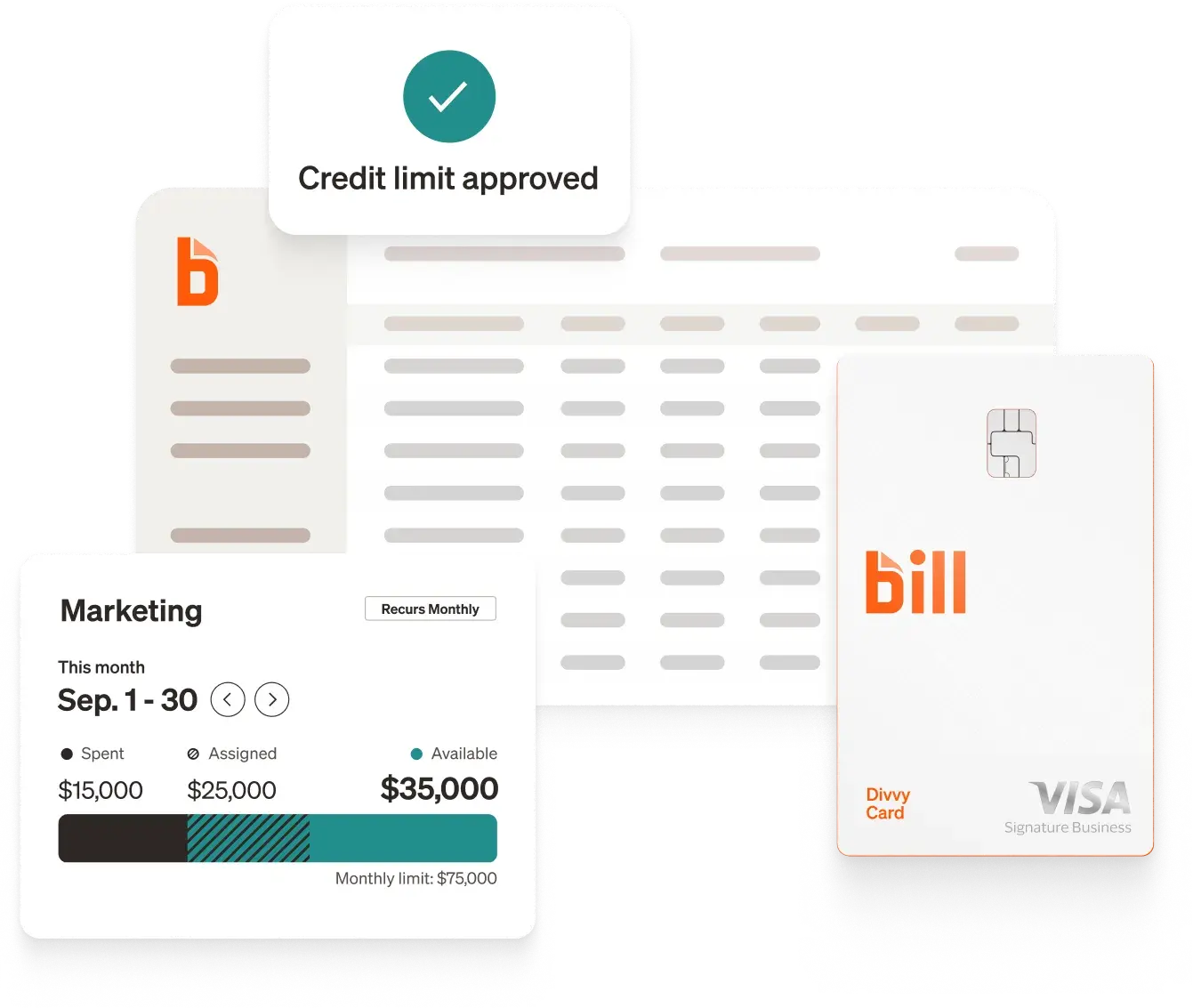
Companies plan their spending ahead of time, setting department-level budgets. Then, they fund those budgets using corporate credit cards with integrated automation software to set predetermined limits.

“Spend management is viewed by finance leaders as the future of expense management,” said Asgeirsson. ”It’s a more strategic sourcing of company funds because it brings all spending into one place for smarter decision-making, compared to expense management which has been historically decentralized by department.”

Why is the shift to spend management so important right now?

Spend management allows for more accurate financial reporting and forecasting against budgets. With today‘s rampant inflation and supply chain challenges plaguing procurement, finance teams are actively seeking ways to tighten their control over cash flow.

Look for AP automation to work hand-in-hand with spend management systems, filling a marketplace gap by providing insight into 100% of B2B spend.

4. Cybersecurity and AI will focus on mitigating human vulnerability

Psychologist John Eastwood, PhD, is known for concocting experiments around what might be the least studied of all human mental states— boredom. Although many of his findings are oddly intriguing, at least one isn’t surprising at all: mundane tasks are highly prone to human error.

“When people are bored they're more likely to make performance errors,” Eastwood commented. “That's a big deal if you're an air-traffic controller.”

It’s a big deal to finance teams too. Mistakes might not be deadly in your average accounts payable department, but they have the potential to cost a company a small fortune.

AP automation software already applies artificial intelligence to read and enter data from invoices, while machine learning comes to recognize the way recurring invoices are presented. This lets computers check details that human operators could easily miss.

Did the address on that invoice suddenly change this month? Is the invoice number a duplicate? Most people gloss over repetitive information, seeing only what they expect to see. The phenomenon is known as change blindness, and the boredom of routine tasks only makes it more likely.

Fortunately, computers don’t suffer from the same problem.

With phishing and other scams on the rise, look for the AI in AP automation to get even better at spotting red flags. Expanded error checking routines and notifications will help finance teams catch mistakes and potential fraud during the invoice intake process, long before any money goes out the door.

5. Integrations and APIs will take efficiency to new levels

Leading AP automation platforms already integrate with major accounting software and ERP systems, bringing tremendous efficiencies to the AP process. Information from an invoice is entered just once, flowing automatically through the payment process and keeping accounting software up to date.

AI can even help human operators enter that data by reading it in for review, further reducing the chance of human error while making the process of data capture faster than ever.

Still, accounting software integration is only the first step in the evolution of AP (and AR) process automation. Business finance workflows are now poised to enter the next stage of digital transformation—fully integrated end-to-end solutions for every aspect of business finance operations.

From payables to receivables, from electronic payments to e-invoicing to business credit cards that come with integrated software, fin-tech companies are working hard to make manual processes a thing of the past for accounting and finance teams.

Look for new integrations to create all-in-one turnkey fin-tech solutions, as well as developer programs and APIs that let businesses extend those integrations throughout their operations.

Bottom line: tech-minded CFOs will widen their strategic growth advantage

Successful startups rarely follow a linear growth pattern. They might take a while to get to that first million in revenue, but after that, growth can speed up, even exponentially.

One of the biggest challenges for CFOs and finance teams is keeping up with the related increase in financial processes and complexity:

  • Supplier orders
  • Billing questions & errors
  • New vendor contracts & terms
  • Outstanding invoices & payments
  • Monthly transaction volume
  • And more

CFOs who put a complete fin-tech stack in place early can stay ahead of the game with workflows that are ready to scale.

Instead of spending all their time wrangling the growth of day-to-day operations, tech-minded CFOs can spend more hours on strategic initiatives—like managing cash flow and securing financing for expanding operations.

The future of AP automation

BILL is used by more businesses to automate payables and receivables than any other platform.

To see how BILL could help you reduce time spent on AP and AR, improve efficiency, speed up your monthly close, and enhance your team’s performance in other key metrics, sign up for a demo today.


Author
Michael Davis
Contributing writer, BILL
Michael specializes in helping businesses optimize financial operations by staying up-to-date with industry trends and translating insights into real-world applications. With expertise in AP, cash flow, and fintech, Michael breaks down complex topics to help businesses continue to grow.
Author
Michael Davis
Contributing writer, BILL
Michael specializes in helping businesses optimize financial operations by staying up-to-date with industry trends and translating insights into real-world applications. With expertise in AP, cash flow, and fintech, Michael breaks down complex topics to help businesses continue to grow.
Get more from BILL
Subscribe to finance insights and thought leadership content delivered straight to your inbox.
By continuing, you agree to BILL's Terms of Service and Privacy Notice.

Frequently asked questions

Dashboard mockup

Ready to bring AI to your finance team?

Take a demo with BILL to see how our integrated platform can provide your business with seamless AP, AR, and spend and expense management.

Request a Demo
The information provided on this page does not, and is not intended to constitute legal or financial advice and is for general informational purposes only. The content is provided "as-is"; no representations are made that the content is error free.

Software Comparison

BILL Spend & Expense
Best for AI expense automation
4.5 on G2
  • Smart corporate cards with real-time tracking, flexible limits, and instant visibility into every transaction across your team [1]
  • Unlimited free virtual cards with unique numbers for each vendor or subscription—freeze, delete, or set custom limits instantly to prevent overcharges and reduce fraud risk [5]
  • AI-powered auto-categorization and receipt matching that connects card transactions and expenses into a single reconciliation workflow [1]
  • Customizable budgets with spend controls based on merchant, amount, receipt requirements, and configurable approval workflows [3]
  • Auto-freeze on cards with incomplete transactions, ensuring receipts and documentation are captured before additional spend is approved [1]
  • Up to 7x points on restaurants, 5x on hotels, 2x on recurring software, and 1.5x on all other purchases (rates shown are for weekly or daily billing cycle; rates vary by billing frequency) [2]
  • Two-way sync with QuickBooks, NetSuite, Sage Intacct, Xero, and Microsoft Dynamics; additional integrations with Acumatica, Slack, and HRIS platforms [1]

Pros

  • $0/user/month with all features included—no paid tier to unlock [4]
  • Merchant controls and auto-freeze cards at no extra cost [1]
  • Credit lines that don't fluctuate daily based on bank balance [4]
  • All ERP integrations (NetSuite, Sage Intacct, Xero) included free [1]

Cons

  • 12-month holding period before rewards can be redeemed [2]
  • Category reward multipliers cap at $5,000/month per category [2]
  • Less established in global, enterprise-scale expense programs with multi-country regulatory requirements

BILL Spend & Expense pairs corporate cards with AI-powered expense management and budget controls in a single platform at no cost—teams aren't paying per user or upgrading to unlock features that competitors gate behind paid tiers.

Merchant-level spend controls and auto-freeze on incomplete transactions give admins granular oversight without manual policing, and two-way ERP integrations are included free where Ramp and Brex charge for NetSuite and Sage Intacct access. The main trade-off is an initial 12-month rewards holding period before accumulated points can be redeemed. [1][2][3][4]

Commonly compared to: Ramp and Brex (for card-first expense management), and SAP Concur (for enterprise expense programs).

Pricing
$0/user/month with no annual fee
Integrations
Two-way sync with QuickBooks, NetSuite, Sage Intacct, Xero, and Microsoft
Ideal company size
SMB to mid-market
SAP Concur
Best for large enterprises
4 on G2
  • AI-powered receipt capture via ExpenseIt on the SAP Concur mobile app, with smart matching that combines credit card charges and e-receipts into expense reports automatically [7]
  • Configurable approval workflows with built-in audit rules that flag policy exceptions, plus optional Intelligent Audit and Verify add-ons for automated compliance checks [6][7]
  • Modular product suite: Concur Expense, Concur Travel, and Concur Invoice are separate products that can be purchased individually or together, so organizations can start with expense management and add capabilities over time [6]
  • Bank card feed integrations that import corporate card transactions directly into expense reports for automatic reconciliation [6]
  • Joule, SAP's AI assistant, for expense report review, spend analysis, and cost estimation [6]
  • Budget tracking and monitoring tools that give finance teams visibility into spend against departmental or project-level budgets [6]
  • Support for global operations with multi-currency expense reporting and country-specific tax and regulatory compliance tools [6]

Pros

  • 300+ pre-built integrations including native SAP ERP sync [7][8]
  • Global coverage with multi-currency and regulatory compliance tools [6]
  • Modular—add travel or invoice management without switching platforms [6]
  • AI-powered receipt capture and smart matching via ExpenseIt [7]

Cons

  • Quote-based pricing; no published rates on the website [6]
  • No corporate card offering; relies on bank card feed integrations [6]
  • Implementation can be complex for smaller organizations [6]
  • Live support requires purchasing the User Support Desk service [6]

SAP Concur is the incumbent in expense management software, with the largest partner ecosystem and broadest global footprint on this list. Its modular approach gives large organizations flexibility to start with expense management and layer on travel or invoice capabilities independently.

The trade-off is complexity—pricing is opaque, there's no corporate card offering, and smaller teams may find the platform more than they need. Organizations already in the SAP ecosystem will get the most value from native S/4HANA integration. [6][7][8]

Commonly compared to: BILL (for SMB expense management), and Coupa (for enterprise spend management).

Pricing
Quote-based
Integrations
QuickBooks, Xero, Sage,TSheets, Gusto, & most business credit cards.
Ideal Company Size
Mid-market to enterprise
Ramp
Best for a broad spend platform
4.8 on G2
  • Corporate cards with customizable spend controls by merchant, category, employee, or department, plus unlimited virtual and physical cards [9][10]
  • AI-powered receipt matching, transaction coding, and memo suggestions that auto-populate as soon as a card is swiped [9]
  • Policy agent that reviews every expense against company policy, auto-approves compliant transactions, and escalates only exceptions with full audit trail [9]
  • Expense submission via SMS, Slack, or Microsoft Teams in addition to web and mobile app [9]
  • Reimbursements for out-of-pocket expenses paid to employees' bank accounts in 1–2 business days [9]
  • Real-time spend reporting with custom dashboards, natural-language queries, and proactive overspend alerts [9]
  • Broader spend platform that includes AP automation, procurement, vendor management, and treasury alongside expense management [9]

Pros

  • Free plan includes corporate cards, expenses, and bill pay [11]
  • AI policy agent reviews 100% of expenses automatically [9]
  • Submit expenses via SMS, Slack, or Teams—no app required [9]
  • Broader spend platform covers AP, procurement, and vendor management [9]

Cons

  • Budget tracking requires Ramp Plus at $15/user/month [11]
  • NetSuite, Sage Intacct, and Dynamics integrations require a paid plan [11]
  • HRIS syncs and auto-lock cards require a paid plan [11]
  • Credit limits fluctuate daily based on connected bank balance [12]

Ramp's strength is breadth—it's not just an expense tool but a full spend management platform that includes AP automation, procurement, and vendor management alongside expenses. The AI policy agent is a differentiator, reviewing every transaction against company rules rather than relying on manual manager approvals.

The trade-off is that several features mid-market teams rely on—budget tracking, ERP integrations beyond QuickBooks and Xero, and HRIS syncs—require upgrading to Ramp Plus at $15/user/month plus a platform fee. [9][11]

Commonly compared to: Brex and BILL (for corporate cards and expense management), and SAP Concur (for enterprise expense programs).

Pricing
$0/user/month
Integrations
QuickBooks, NetSuite, Xero, Sage Intacct, Slack, & 100+ accounting tools.
Ideal Company Size
Startups to mid-market
Brex
Best for global teams
4.8 on G2
  • Corporate cards with customizable spend limits by role, department, or category, plus auto-approve for in-policy expenses and auto-decline for out-of-policy spend [13][14]
  • AI-powered expense reviews that auto-approve compliant transactions and surface only exceptions for human review, with clear visibility into why a transaction is flagged [13]
  • Auto-generated receipts and memos with OCR that matches receipts in any language or currency, plus automatic GL coding by department, project, and entity [13]
  • Live Budgets that let department heads set top-level budgets, provision spend to individuals or teams, and track usage in real time with anomaly detection [13]
  • Global reimbursements in 70+ countries in employees' local currency, with subsidiaries able to issue reimbursements from local bank accounts [13]
  • Expense submission and approval via Slack and WhatsApp, with in-app commenting on individual transactions [13]
  • Broader financial platform that includes bill pay, business banking with up to 3.68% yield, and treasury alongside expense management [14]

Pros

  • Free plan includes corporate cards, expenses, bill pay, and travel [15]
  • AI expense reviews with 99% average policy compliance rate [14]
  • Global reimbursements in 70+ countries in local currency [13]
  • Live Budgets with real-time tracking and anomaly detection [13]

Cons

  • Live Budgets require Premium at $12/user/month [15]
  • HRIS syncs and customizable ERP integrations require a paid plan [15]
  • Credit limits fluctuate daily based on connected bank balance [16]
  • Multiple expense policies and dynamic review chains require Premium [15]

Brex positions itself as a full financial stack for startups—cards, expenses, banking, and treasury in one platform. The AI expense reviews and 99% average compliance rate (per Brex's internal metrics) are notable, and the global reimbursement coverage across 70+ countries is broader than most competitors on this list.

Like Ramp, Brex gates budget management and HRIS integrations behind a paid tier, and credit limits fluctuate daily based on your bank balance. Teams that need predictable spending power or are past the startup stage may find the pricing structure adds up. [13][14][15]

Commonly compared to: Ramp and BILL (for corporate cards and expense management), and SAP Concur (for enterprise expense programs).

Pricing
$0/user/month
Integrations
NetSuite, QuickBooks, Workday,SAP Concur, Slack, & global banking portals.
Ideal Company Size
Startups to mid-market
Expensify
Best for simple reimbursements
4.5 on G2
  • SmartScan receipt capture by photo, email forwarding (receipts@expensify.com), or text message; auto-extracts transaction details and categorizes expenses [17]
  • Bring-your-own-card support: link existing corporate cards from 10,000+ banks globally for automatic reconciliation without switching card providers [17]
  • Expensify Visa Commercial Card with cash back on US purchases; cash back first offsets the Expensify subscription cost, then flows to the company's bank account [17]
  • Concierge AI for automated expense categorization, policy violation flagging, rule enforcement, and error reduction [17]
  • Global reimbursements for employees and independent contractors in their local currency [17]
  • Chat-based collaboration directly on individual expenses to resolve questions in real time rather than through email follow-ups [17]
  • 45+ integrations including QuickBooks, NetSuite, Sage Intacct, Xero, Workday, and Gusto [17]

Pros

  • Bring-your-own-card from 10,000+ banks globally [17]
  • Expensify Card cash back can offset the subscription cost [17]
  • SmartScan receipt capture by photo, email, or text message [17]
  • 45+ integrations including major ERPs and payroll systems [17]

Cons

  • No free plan; starts at $5/user/month [18]
  • Pricing structure varies by card spend volume [18]
  • Budget management, advanced approvals, and expense policies require Collect or Control plans [17]
  • No department-level budget management on par with card-first platforms

Expensify's strength is accessibility—it has the lowest barrier to entry for teams that just need to start tracking expenses and submitting receipts. The bring-your-own-card support from 10,000+ banks means companies don't have to switch card providers, and the SmartScan receipt capture (by photo, email, or text) is one of the more flexible input methods on this list.

The trade-off is that several features mid-market teams expect—budget management, advanced approvals, and expense policies—require upgrading to the Collect or Control plans, and spend controls are primarily limited to the Expensify Card rather than extending across all connected cards. [17][18]

Commonly compared to: Zoho Expense (for budget-friendly expense management), and BILL and Ramp (for integrated cards and expenses).

Pricing
From $5/user/month
Integrations
QuickBooks, Xero, Sage, TSheets, Gusto, & most business credit cards.
Ideal Company Size
Small to mid-market
Zoho Expense
Best for budget-conscious teams
4.5 on G2
  • Autoscan receipt capture with OCR that auto-categorizes and itemizes each expense, plus the ability to split or tag expenses across departments, projects, or cost centers [19][20]
  • Automated per diem calculations with pre-defined rules based on country, location, and trip details for regional compliance [20]
  • Corporate card management with real-time feeds that automatically match transactions to uploaded receipts for faster reconciliation [20]
  • Mileage tracking with four input methods across Android, iPhone, and Apple Watch [20]
  • Configurable approval workflows, expense policies, and audit rules with detailed audit trails for compliance [19][20]
  • Custom modules, workflow automation, webhooks, and configurable UI elements for businesses that need tailored expense processes [19]
  • Active-user pricing model: only employees who actually create expenses are charged, so admins and approvers who don't submit reports are free [21]

Pros

  • Free plan available for up to 3 users with core expense tracking [21]
  • Active-user pricing—admins and approvers aren't charged [21]
  • Automated per diem calculations by country and location [20]
  • Deep customization with custom modules and workflow automation [19]

Cons

  • Corporate card feeds and multi-level approvals require Standard plan [21]
  • Deepest value requires the broader Zoho ecosystem (Books, People, CRM) [19]
  • No corporate card offering; relies on connecting existing cards [20]
  • Travel booking, per diem, and live budgets require Premium plan [21]

Zoho Expense offers unusually deep customization at a low price point—custom modules, workflow automation, webhooks, and configurable UI elements that most competitors don't expose. The active-user pricing model is genuinely cost-effective for companies where only a portion of employees submit expenses regularly.

The trade-off is that there's no corporate card offering—you'll need to connect your existing cards—and the platform delivers its deepest value when used alongside other Zoho products like Zoho Books and Zoho People. [19][20][21]

Commonly compared to: Expensify (for budget-friendly expense management), and SAP Concur (for global compliance and customization).

Pricing
Free (3 users); from $4/user/month
Integrations
Zoho Books, QuickBooks, Xero, Sage, Microsoft Dynamics, & Google Workspace.
Ideal Company Size
Small to mid-market

Software Comparison

BILL Spend & Expense
Best for AI expense automation
4.5 on G2
  • Smart corporate cards with real-time tracking, flexible limits, and instant visibility into every transaction across your team [1]
  • Unlimited free virtual cards with unique numbers for each vendor or subscription—freeze, delete, or set custom limits instantly to prevent overcharges and reduce fraud risk [5]
  • AI-powered auto-categorization and receipt matching that connects card transactions and expenses into a single reconciliation workflow [1]
  • Customizable budgets with spend controls based on merchant, amount, receipt requirements, and configurable approval workflows [3]
  • Auto-freeze on cards with incomplete transactions, ensuring receipts and documentation are captured before additional spend is approved [1]
  • Up to 7x points on restaurants, 5x on hotels, 2x on recurring software, and 1.5x on all other purchases (rates shown are for weekly or daily billing cycle; rates vary by billing frequency) [2]
  • Two-way sync with QuickBooks, NetSuite, Sage Intacct, Xero, and Microsoft Dynamics; additional integrations with Acumatica, Slack, and HRIS platforms [1]

Pros

  • $0/user/month with all features included—no paid tier to unlock [4]
  • Merchant controls and auto-freeze cards at no extra cost [1]
  • Credit lines that don't fluctuate daily based on bank balance [4]
  • All ERP integrations (NetSuite, Sage Intacct, Xero) included free [1]

Cons

  • 12-month holding period before rewards can be redeemed [2]
  • Category reward multipliers cap at $5,000/month per category [2]
  • Less established in global, enterprise-scale expense programs with multi-country regulatory requirements

BILL Spend & Expense pairs corporate cards with AI-powered expense management and budget controls in a single platform at no cost—teams aren't paying per user or upgrading to unlock features that competitors gate behind paid tiers.

Merchant-level spend controls and auto-freeze on incomplete transactions give admins granular oversight without manual policing, and two-way ERP integrations are included free where Ramp and Brex charge for NetSuite and Sage Intacct access. The main trade-off is an initial 12-month rewards holding period before accumulated points can be redeemed. [1][2][3][4]

Commonly compared to: Ramp and Brex (for card-first expense management), and SAP Concur (for enterprise expense programs).

Pricing
$0/user/month with no annual fee
Integrations
Two-way sync with QuickBooks, NetSuite, Sage Intacct, Xero, and Microsoft
Ideal company size
SMB to mid-market
SAP Concur
Best for large enterprises
4 on G2
  • AI-powered receipt capture via ExpenseIt on the SAP Concur mobile app, with smart matching that combines credit card charges and e-receipts into expense reports automatically [7]
  • Configurable approval workflows with built-in audit rules that flag policy exceptions, plus optional Intelligent Audit and Verify add-ons for automated compliance checks [6][7]
  • Modular product suite: Concur Expense, Concur Travel, and Concur Invoice are separate products that can be purchased individually or together, so organizations can start with expense management and add capabilities over time [6]
  • Bank card feed integrations that import corporate card transactions directly into expense reports for automatic reconciliation [6]
  • Joule, SAP's AI assistant, for expense report review, spend analysis, and cost estimation [6]
  • Budget tracking and monitoring tools that give finance teams visibility into spend against departmental or project-level budgets [6]
  • Support for global operations with multi-currency expense reporting and country-specific tax and regulatory compliance tools [6]

Pros

  • 300+ pre-built integrations including native SAP ERP sync [7][8]
  • Global coverage with multi-currency and regulatory compliance tools [6]
  • Modular—add travel or invoice management without switching platforms [6]
  • AI-powered receipt capture and smart matching via ExpenseIt [7]

Cons

  • Quote-based pricing; no published rates on the website [6]
  • No corporate card offering; relies on bank card feed integrations [6]
  • Implementation can be complex for smaller organizations [6]
  • Live support requires purchasing the User Support Desk service [6]

SAP Concur is the incumbent in expense management software, with the largest partner ecosystem and broadest global footprint on this list. Its modular approach gives large organizations flexibility to start with expense management and layer on travel or invoice capabilities independently.

The trade-off is complexity—pricing is opaque, there's no corporate card offering, and smaller teams may find the platform more than they need. Organizations already in the SAP ecosystem will get the most value from native S/4HANA integration. [6][7][8]

Commonly compared to: BILL (for SMB expense management), and Coupa (for enterprise spend management).

Pricing
Quote-based
Integrations
QuickBooks, Xero, Sage,TSheets, Gusto, & most business credit cards.
Ideal Company Size
Mid-market to enterprise
Ramp
Best for a broad spend platform
4.8 on G2
  • Corporate cards with customizable spend controls by merchant, category, employee, or department, plus unlimited virtual and physical cards [9][10]
  • AI-powered receipt matching, transaction coding, and memo suggestions that auto-populate as soon as a card is swiped [9]
  • Policy agent that reviews every expense against company policy, auto-approves compliant transactions, and escalates only exceptions with full audit trail [9]
  • Expense submission via SMS, Slack, or Microsoft Teams in addition to web and mobile app [9]
  • Reimbursements for out-of-pocket expenses paid to employees' bank accounts in 1–2 business days [9]
  • Real-time spend reporting with custom dashboards, natural-language queries, and proactive overspend alerts [9]
  • Broader spend platform that includes AP automation, procurement, vendor management, and treasury alongside expense management [9]

Pros

  • Free plan includes corporate cards, expenses, and bill pay [11]
  • AI policy agent reviews 100% of expenses automatically [9]
  • Submit expenses via SMS, Slack, or Teams—no app required [9]
  • Broader spend platform covers AP, procurement, and vendor management [9]

Cons

  • Budget tracking requires Ramp Plus at $15/user/month [11]
  • NetSuite, Sage Intacct, and Dynamics integrations require a paid plan [11]
  • HRIS syncs and auto-lock cards require a paid plan [11]
  • Credit limits fluctuate daily based on connected bank balance [12]

Ramp's strength is breadth—it's not just an expense tool but a full spend management platform that includes AP automation, procurement, and vendor management alongside expenses. The AI policy agent is a differentiator, reviewing every transaction against company rules rather than relying on manual manager approvals.

The trade-off is that several features mid-market teams rely on—budget tracking, ERP integrations beyond QuickBooks and Xero, and HRIS syncs—require upgrading to Ramp Plus at $15/user/month plus a platform fee. [9][11]

Commonly compared to: Brex and BILL (for corporate cards and expense management), and SAP Concur (for enterprise expense programs).

Pricing
$0/user/month
Integrations
QuickBooks, NetSuite, Xero, Sage Intacct, Slack, & 100+ accounting tools.
Ideal Company Size
Startups to mid-market
Brex
Best for global teams
4.8 on G2
  • Corporate cards with customizable spend limits by role, department, or category, plus auto-approve for in-policy expenses and auto-decline for out-of-policy spend [13][14]
  • AI-powered expense reviews that auto-approve compliant transactions and surface only exceptions for human review, with clear visibility into why a transaction is flagged [13]
  • Auto-generated receipts and memos with OCR that matches receipts in any language or currency, plus automatic GL coding by department, project, and entity [13]
  • Live Budgets that let department heads set top-level budgets, provision spend to individuals or teams, and track usage in real time with anomaly detection [13]
  • Global reimbursements in 70+ countries in employees' local currency, with subsidiaries able to issue reimbursements from local bank accounts [13]
  • Expense submission and approval via Slack and WhatsApp, with in-app commenting on individual transactions [13]
  • Broader financial platform that includes bill pay, business banking with up to 3.68% yield, and treasury alongside expense management [14]

Pros

  • Free plan includes corporate cards, expenses, bill pay, and travel [15]
  • AI expense reviews with 99% average policy compliance rate [14]
  • Global reimbursements in 70+ countries in local currency [13]
  • Live Budgets with real-time tracking and anomaly detection [13]

Cons

  • Live Budgets require Premium at $12/user/month [15]
  • HRIS syncs and customizable ERP integrations require a paid plan [15]
  • Credit limits fluctuate daily based on connected bank balance [16]
  • Multiple expense policies and dynamic review chains require Premium [15]

Brex positions itself as a full financial stack for startups—cards, expenses, banking, and treasury in one platform. The AI expense reviews and 99% average compliance rate (per Brex's internal metrics) are notable, and the global reimbursement coverage across 70+ countries is broader than most competitors on this list.

Like Ramp, Brex gates budget management and HRIS integrations behind a paid tier, and credit limits fluctuate daily based on your bank balance. Teams that need predictable spending power or are past the startup stage may find the pricing structure adds up. [13][14][15]

Commonly compared to: Ramp and BILL (for corporate cards and expense management), and SAP Concur (for enterprise expense programs).

Pricing
$0/user/month
Integrations
NetSuite, QuickBooks, Workday,SAP Concur, Slack, & global banking portals.
Ideal Company Size
Startups to mid-market
Expensify
Best for simple reimbursements
4.5 on G2
  • SmartScan receipt capture by photo, email forwarding (receipts@expensify.com), or text message; auto-extracts transaction details and categorizes expenses [17]
  • Bring-your-own-card support: link existing corporate cards from 10,000+ banks globally for automatic reconciliation without switching card providers [17]
  • Expensify Visa Commercial Card with cash back on US purchases; cash back first offsets the Expensify subscription cost, then flows to the company's bank account [17]
  • Concierge AI for automated expense categorization, policy violation flagging, rule enforcement, and error reduction [17]
  • Global reimbursements for employees and independent contractors in their local currency [17]
  • Chat-based collaboration directly on individual expenses to resolve questions in real time rather than through email follow-ups [17]
  • 45+ integrations including QuickBooks, NetSuite, Sage Intacct, Xero, Workday, and Gusto [17]

Pros

  • Bring-your-own-card from 10,000+ banks globally [17]
  • Expensify Card cash back can offset the subscription cost [17]
  • SmartScan receipt capture by photo, email, or text message [17]
  • 45+ integrations including major ERPs and payroll systems [17]

Cons

  • No free plan; starts at $5/user/month [18]
  • Pricing structure varies by card spend volume [18]
  • Budget management, advanced approvals, and expense policies require Collect or Control plans [17]
  • No department-level budget management on par with card-first platforms

Expensify's strength is accessibility—it has the lowest barrier to entry for teams that just need to start tracking expenses and submitting receipts. The bring-your-own-card support from 10,000+ banks means companies don't have to switch card providers, and the SmartScan receipt capture (by photo, email, or text) is one of the more flexible input methods on this list.

The trade-off is that several features mid-market teams expect—budget management, advanced approvals, and expense policies—require upgrading to the Collect or Control plans, and spend controls are primarily limited to the Expensify Card rather than extending across all connected cards. [17][18]

Commonly compared to: Zoho Expense (for budget-friendly expense management), and BILL and Ramp (for integrated cards and expenses).

Pricing
From $5/user/month
Integrations
QuickBooks, Xero, Sage, TSheets, Gusto, & most business credit cards.
Ideal Company Size
Small to mid-market
Zoho Expense
Best for budget-conscious teams
4.5 on G2
  • Autoscan receipt capture with OCR that auto-categorizes and itemizes each expense, plus the ability to split or tag expenses across departments, projects, or cost centers [19][20]
  • Automated per diem calculations with pre-defined rules based on country, location, and trip details for regional compliance [20]
  • Corporate card management with real-time feeds that automatically match transactions to uploaded receipts for faster reconciliation [20]
  • Mileage tracking with four input methods across Android, iPhone, and Apple Watch [20]
  • Configurable approval workflows, expense policies, and audit rules with detailed audit trails for compliance [19][20]
  • Custom modules, workflow automation, webhooks, and configurable UI elements for businesses that need tailored expense processes [19]
  • Active-user pricing model: only employees who actually create expenses are charged, so admins and approvers who don't submit reports are free [21]

Pros

  • Free plan available for up to 3 users with core expense tracking [21]
  • Active-user pricing—admins and approvers aren't charged [21]
  • Automated per diem calculations by country and location [20]
  • Deep customization with custom modules and workflow automation [19]

Cons

  • Corporate card feeds and multi-level approvals require Standard plan [21]
  • Deepest value requires the broader Zoho ecosystem (Books, People, CRM) [19]
  • No corporate card offering; relies on connecting existing cards [20]
  • Travel booking, per diem, and live budgets require Premium plan [21]

Zoho Expense offers unusually deep customization at a low price point—custom modules, workflow automation, webhooks, and configurable UI elements that most competitors don't expose. The active-user pricing model is genuinely cost-effective for companies where only a portion of employees submit expenses regularly.

The trade-off is that there's no corporate card offering—you'll need to connect your existing cards—and the platform delivers its deepest value when used alongside other Zoho products like Zoho Books and Zoho People. [19][20][21]

Commonly compared to: Expensify (for budget-friendly expense management), and SAP Concur (for global compliance and customization).

Pricing
Free (3 users); from $4/user/month
Integrations
Zoho Books, QuickBooks, Xero, Sage, Microsoft Dynamics, & Google Workspace.
Ideal Company Size
Small to mid-market